The First Few Seconds Decide the Class of a Place
People read the class of a place in the first few seconds, from the communal areas. One precise piece in the lobby or the courtyard gives a development recognition, free reach on social media and a reason to return or to choose.
- Author
- Konstantin Burtsev, ENTORA
- Date
- Reading
- 6 min
- Topics
- hotels · developers · premium · art · recognition
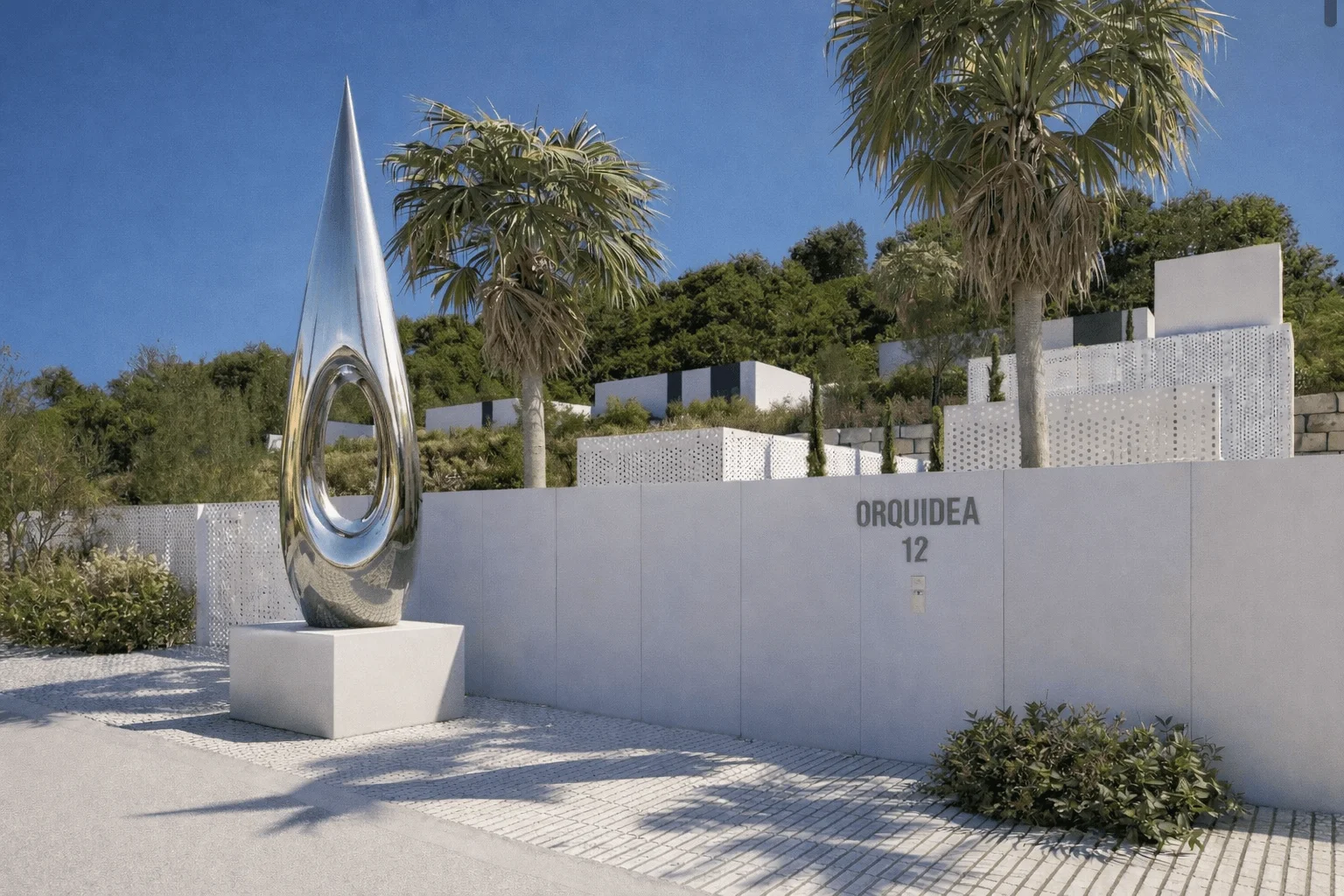
People read the class of a place in the first few seconds, before they reach the room or the flat
A person walks into a hotel or a residential development and decides within seconds which class they have landed in. That decision forms before the front desk, the lift and the room, from the communal areas. From what they see on the way in, what they want to photograph, what they remember and talk about at home. In a hotel, this is the lobby and the communal areas; in premium residential, it is the entrance, the lobby and the courtyard. Rooms and flats cover the function. People read the class from the communal space.
Places that read clearly as high class hold this layer on purpose: each one has a recognisable spatial signature, a single image that sets it apart from the development next door. Many hotels and developments have no such anchor in their public areas. The environment covers the function and leaves a blank where the character should be.
A refurbishment and landscaping cover the function. One piece covers the recognition
A refurbishment of the communal areas in a hotel, the lawn and the lighting in a development's courtyard, are the foundation. They are needed. But people read the status from what stayed in the memory. That is a separate layer on top of the building work and the landscaping, and a single precise anchor holds it.
The anchor is one piece that holds the area with a clear image and leaves air around it. Light, composed, scaled to the real proportions of the lobby, the terrace or the courtyard. A person walks in and understands at once where they are.
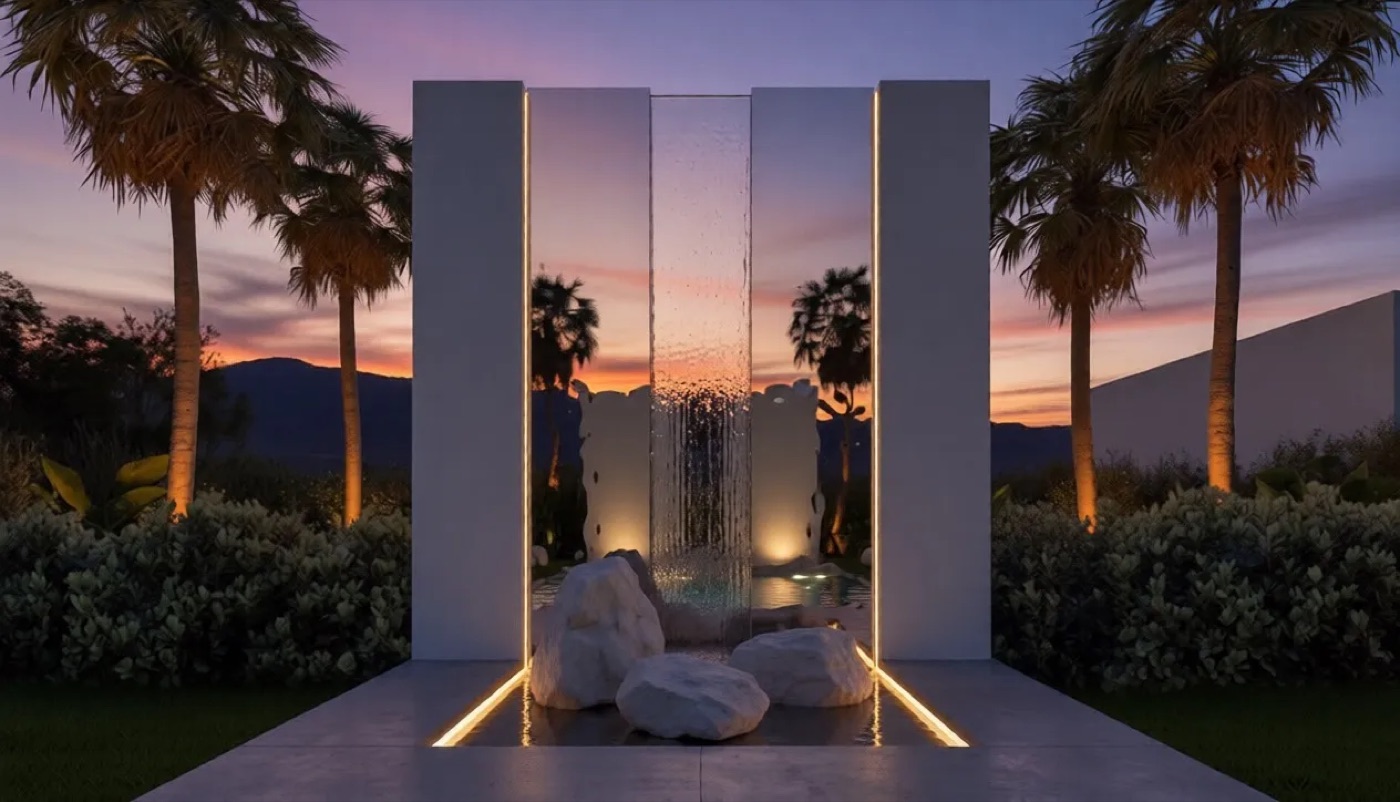
Repositioning a hotel into luxury, or positioning a residential development as premium, costs millions. An anchor in the communal area is a small share of that budget, yet it answers for what a person reads first and remembers longest.
One piece does three things at once
It gives recognition. The place gains an image people describe it by: 'the hotel where the lobby has...' or 'the development where the courtyard has...'. In the lobby of the Barceló Torre de Madrid, guests are met by a large bear sculpture, designer Jaime Hayón's reading of the city's coat of arms (2017). A single piece with local meaning became a draw for guests and for the people of Madrid alike. In premium residential, a piece like this turns 'the building on calle X' into an address people call by name.
It starts free organic reach. People photograph the piece themselves, and the images spread across their social media. This is a channel of attention that no advertising buys. The steel waterfall sculpture in the atrium of the VP Plaza España hotel in Madrid became the image guests reach for their phone to capture. The pink Gallery room at the London restaurant Sketch, designed by India Mahdavi, is one the studio itself calls 'the most Instagrammed restaurant in the world', a signature that held its reach for roughly eight years. In a Schofields survey (2017, over 1,000 Britons aged 18-33), the 'Instagrammability' of a trip came out as the number one factor in choosing where to go: 40.1%, ahead of cost and food. For a hotel and for a developer, this means a photogenic anchor works as a standing channel, for bookings and for flat viewings.
It brings people back and persuades them. In a hotel, the piece turns a guest into someone who recommends it and returns. The golden statue of Diana on the rooftop of the Hyatt Centric Gran Vía in Madrid turned the roof into an address people seek out by name. In a residential development, the same piece in the courtyard becomes an argument for the buyer choosing between similar schemes: a courtyard they will live with every day.
An anchor lifts the rate and the premium
A strong impression of the environment lifts guest scores, and the scores move the price. Research from Cornell (Chris Anderson) found that a 1% rise in a hotel's online reputation gives roughly +0.89% to the average rate and +1.42% to revenue per room. After repositioning, the NH Collection Eurobuilding in Madrid raised its average rate by around 40% (according to Hosteltur).
In premium residential the mechanism is the same: a recognisable communal environment holds the premium per square metre, speeds the sale of phases and keeps working on value for years after handover. There is a fuller account in the piece on what the buyer decides on the walk to the entrance.
There is no isolated figure in the open data that says 'one piece brought this many per cent', because the effect of the environment is not measured on a single object. That is a reason to run a pilot: install one anchor and measure reach, rate and sales pace before and after. And the wider point, that art in the environment raises perceived value and willingness to pay, is supported in the academic work too (Hagtvedt and Patrick, 'Art Infusion', 2008).
How the piece goes into a working place
The main constraint is that a hotel cannot close and a finished courtyard cannot be dug up. So the anchor is designed to be light. Mirror-polished 316L stainless steel, cast acrylic, epoxy-resin detailing and art glass give freedom of form at low weight. Low weight reduces the demands on the base and simplifies installation in an interior already in use or on completed grounds, with no long shutdown.
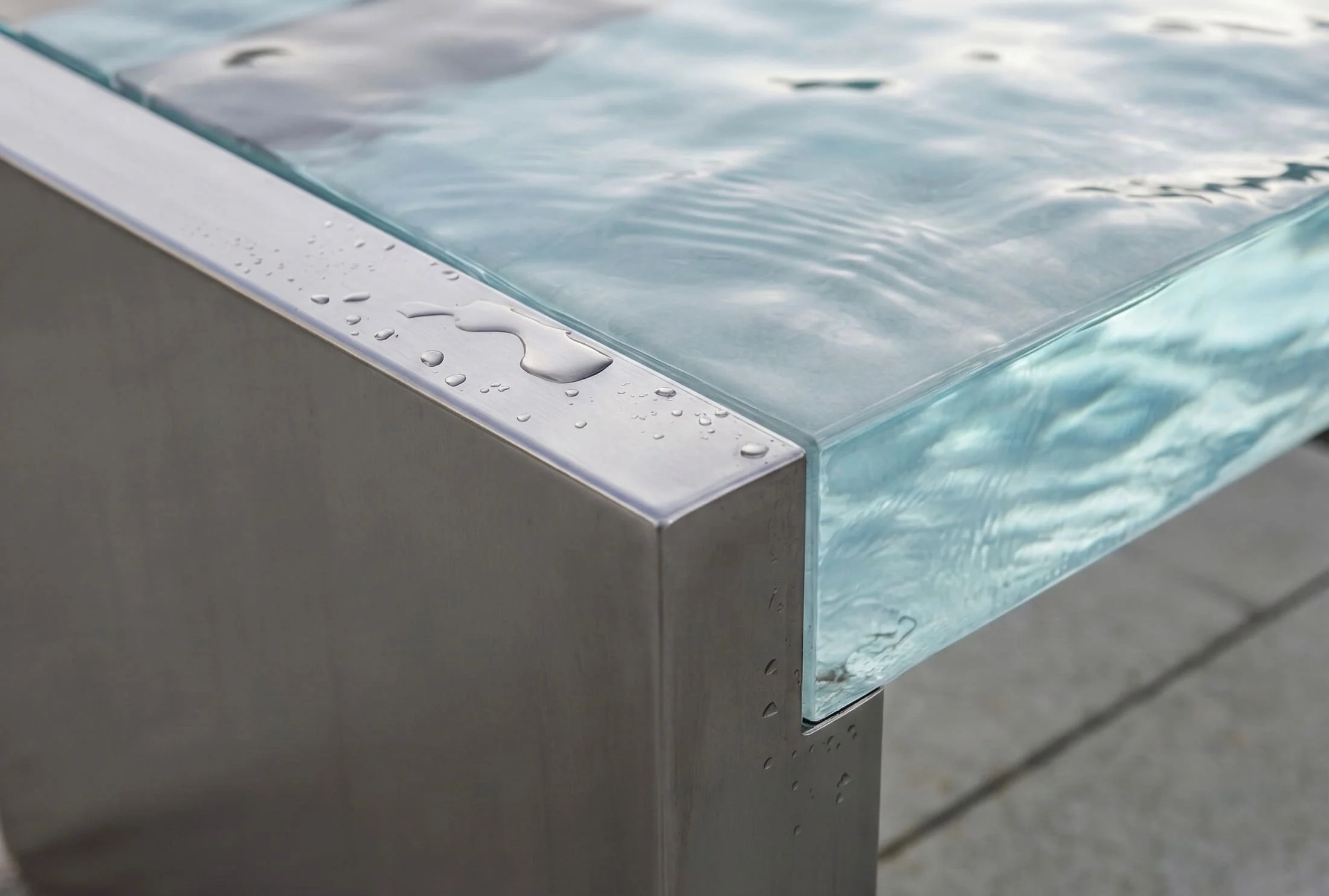
Installation is planned around the life of the place: night shifts, a phased start, a section fenced off for a handful of days. ENTORA installed a mirror sculpture series in 316L steel in front of the Radisson Collection hotel: the piece works as a photo magnet from day one and holds its organic reach with no promotion, and it survives winters and rain with no maintenance beyond an ordinary wash. A suspended composition in a 19th-century listed building was installed with no break in the flow and no work to the walls, and the solution is fully reversible.
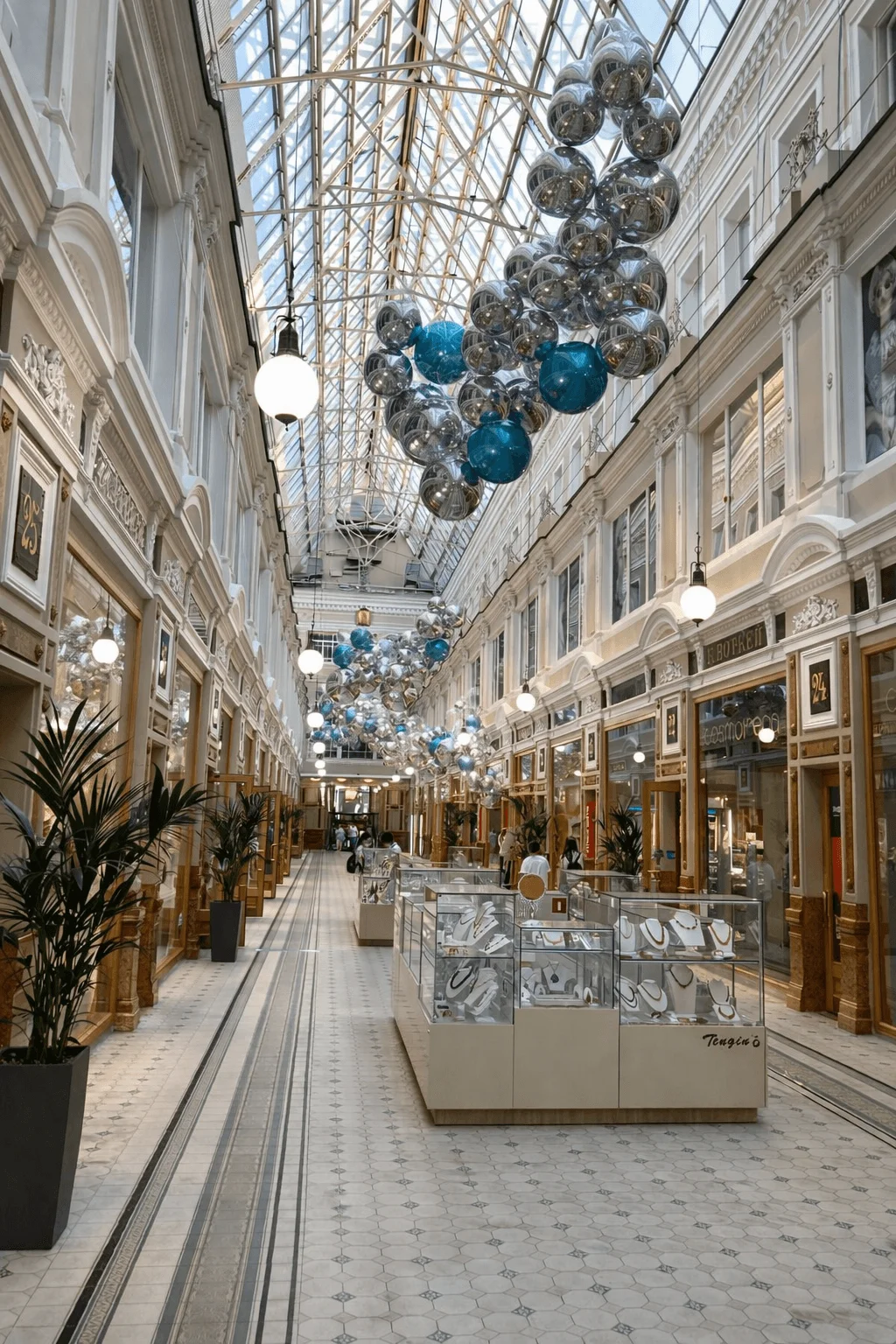
The full cycle, from idea to installation
A piece like this is easier to run with one team than to assemble from ten contractors. ENTORA answers for the whole route: concept, design, engineering, fabrication at trusted European workshops, installation and handover. One contract, one point of responsibility, one standard. The budget is fixed before fabrication begins, so what goes up on site is exactly what was approved in the visualisation, with no budget surprises and no disputes with the interior or landscaping contractor.
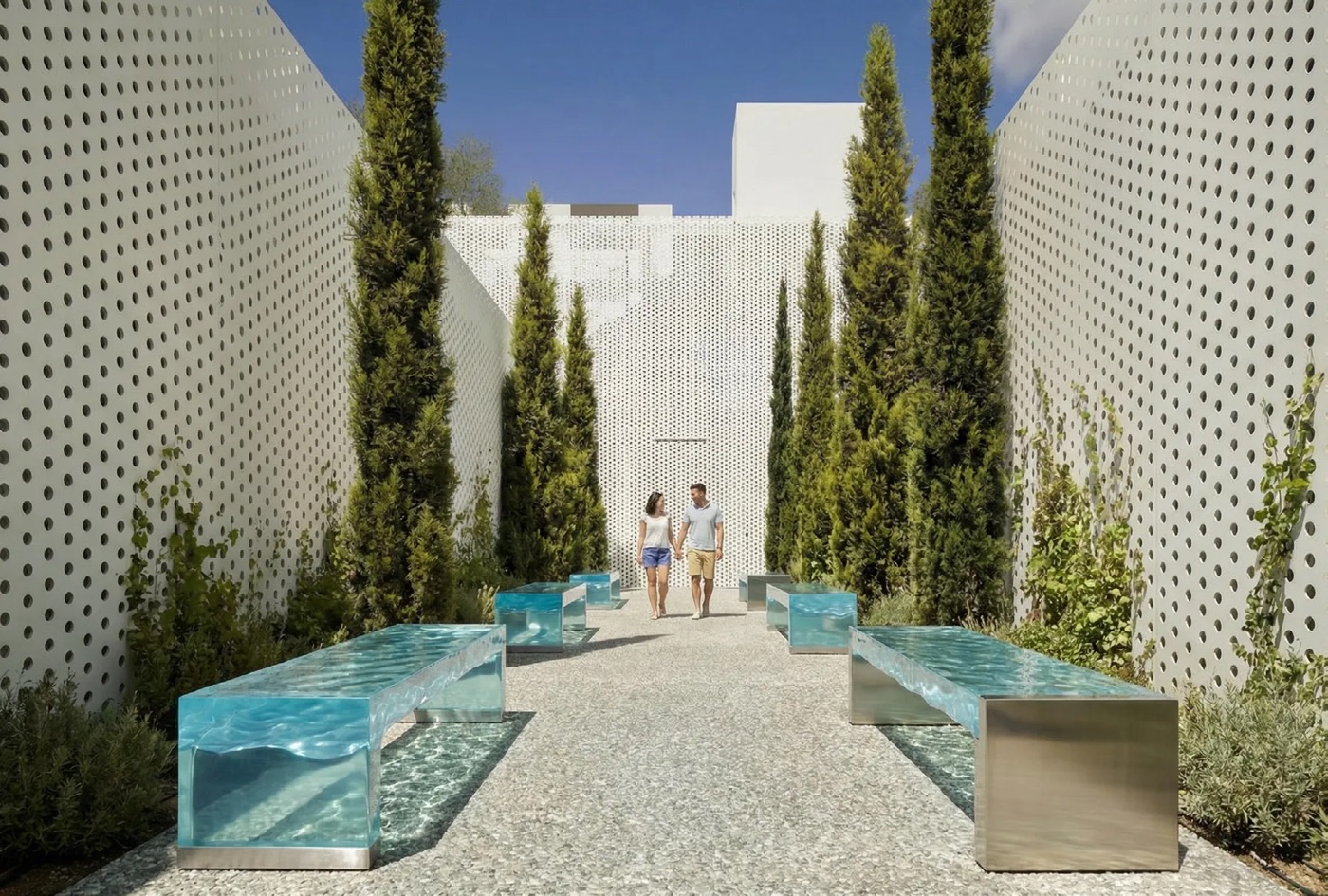
Common mistakes
A piece on top of a finished area. A sculpture is chosen from a catalogue and placed in a completed lobby or courtyard. The result is an object in a setting, with no dialogue with the space. People read the mismatch at once.
Cold light. The anchor is lit with general-purpose floodlights at 5000-6500K, and the piece works like a shop window. Warm directional light at 2700-3000K changes the perception completely.
Material with no calculation. Steel 304 instead of 316L, a cheap composite, and after two winters there is corrosion and an invoice for the management company that was never in the budget. For a piece by the sea this is a direct question of service life.
Price and timeline
CONCEPT - one week, fixed price, with a document tying the piece to your space as the deliverable. DESIGN with sketches and visualisations - from €5,000. ENGINEERING with load calculations and fixing joints - from €5,000. Fabrication and installation are costed for the chosen direction. The concept alone is enough to see the solution and decide on the next step.
Where to start
A place with no anchor competes on price. With one, it competes on character, which no discount can match.
The environment anchor is the part of positioning a hotel or a residential development that makes the investment visible at first glance and works on recognition every day.
The first step is a study of your site: it shows where the communal areas lose their character and where to start. Get in touch through the website form or message us on WhatsApp, whichever suits you.