The First Sentence of a Hotel
A week after the trip, a hotel shrinks to a single sentence, the one a guest uses to describe it to friends. The next person chooses where to stay by that sentence, and it is written by the entrance and the lobby, in the first few seconds, before you reach the front desk.
- Author
- Konstantin Burtsev, ENTORA
- Date
- Reading
- 6 min
- Topics
- hotels · lobby · recognition · recommendations
The Guest Leaves With a Single Sentence
A week after the trip, what remains of a hotel is a single sentence, the one a guest uses to describe it to friends. 'A decent hotel, clean, good breakfast.' Or 'the one with the... in the lobby.' That sentence is the real advertising for the place. It cannot be bought through an ad platform, and it cannot be added once the guest has checked out. A guest says it over dinner, in a work chat, in a story on the way to the airport, and the next person decides where to stay by it.
A hotel lives on recommendation. People choose a place someone described in a way that made them want to go too. So a hotel has one precise question: which sentence will the guest carry away, and will they say it to anyone.
The Entrance and the Lobby Write the Sentence
A guest decides which hotel they have walked into long before the room. The decision is made at the entrance and in the lobby, in the first few seconds, as you cross from the door to the desk. The room will cover the function later: the bed, the quiet, the water in the shower. The sentence forms earlier, in the shared space, out of what the guest has seen, what they wanted to photograph and what they couldn't quite put into words.
So the lobby carries more than it seems. It is the first and last point where a hotel speaks about itself in full. In many hotels that point is empty: the refurbishment is done, the lighting has been replaced, the furniture is expensive, and still there is nothing to say about the lobby. The guest crosses it without pausing and leaves with the breakfast-and-cleanliness sentence. That sentence is said flatly and forgotten by the next day.
What Goes Into the Sentence
What goes into the sentence is a concrete image, one you can name in one go. One piece, one signature that tells a hotel apart from the one next door. In the lobby of the Barceló Torre de Madrid a large bear sculpture greets the guest, the designer Jaime Hayón's reading of the city's coat of arms. The hotel is described by exactly that: 'the one with the bear in the lobby'. The sentence is short, easy to repeat, and it carries the address inside it. The place gains an image that tells itself.
The Madrid hotel VP Plaza España reads the same way: a metal waterfall more than 25 metres tall drops through the whole atrium from the panoramic pool at the top, and the guest reaches for their phone before they have even checked in. A signature can be figurative, like the bear, or abstract, like that fall of metal; what matters is that there is one and it is precise, so it can be caught in a short sentence and pointed at.
A shared space without that image gives a generic sentence, the kind that fits hundreds of hotels at once and singles out none. The difference between two hotels is settled in the lobby, on one test: whether there is a thought in it the guest can retell.
A Sentence You Can Photograph Travels on Its Own
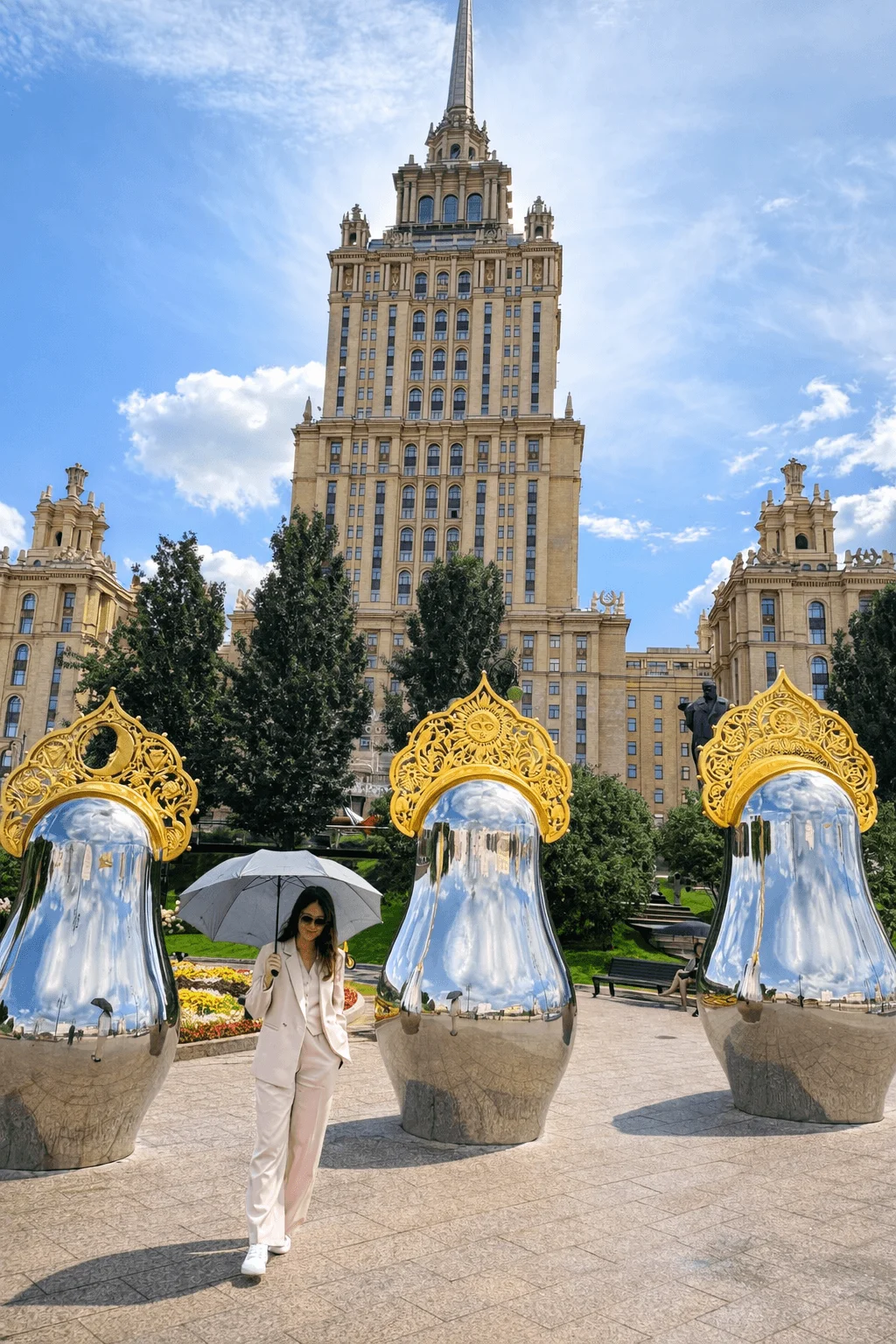
A strong sentence has a picture. The guest reaches for their phone, photographs the piece, and the shot goes to their feed. One precise piece in the lobby or at the entrance sets off a stream of photographs taken by the guests themselves, and that stream runs every day. Then a simple reflex takes over: a place where a good shot came out is one you want to show friends and one you want to return to. A one-time guest becomes someone who recommends the hotel and books it again.
The same sentence lives in the reviews. A review is the written version of what a guest would say out loud, and it moves the price directly. According to Cornell University (Chris Anderson), a 1% rise in a hotel's online reputation lifts the average daily rate by around 0.89% and revenue per room by almost 1.42%. A place with something to say gathers more reviews and holds a higher price at the same occupancy.
An Error You See at Once
The most common failure looks expensive. The sculpture is chosen from a catalogue and placed in a finished lobby to cover a blank wall. What you get is an object sitting inside the interior, apart from the space around it. The guest reads the mismatch in a second, and the sentence comes out the other way: 'expensive and out of place'. The second common failure hides in the light. A strong piece is lit with cold general-purpose floodlights, and the lobby starts to look like a shop window. Warm, directed light changes the same scene completely.
Why It Is Done Once, and for the Long Term
A lobby piece is designed for one specific room: for the ceiling height, the light, the route from the door to the desk. It is built for an address, for the geometry of that particular hall. The hotel stays open throughout, so the dominant piece is kept light. Mirror-finish steel, cast acrylic and art glass give freedom of form at low weight and a straightforward installation in a working interior.
The installation is planned around the life of the hotel: night shifts, a phased handover, the area fenced off for a few days. The flow of guests carries on as usual. The solution is made reversible, so the piece can be removed without a trace on walls or floors.
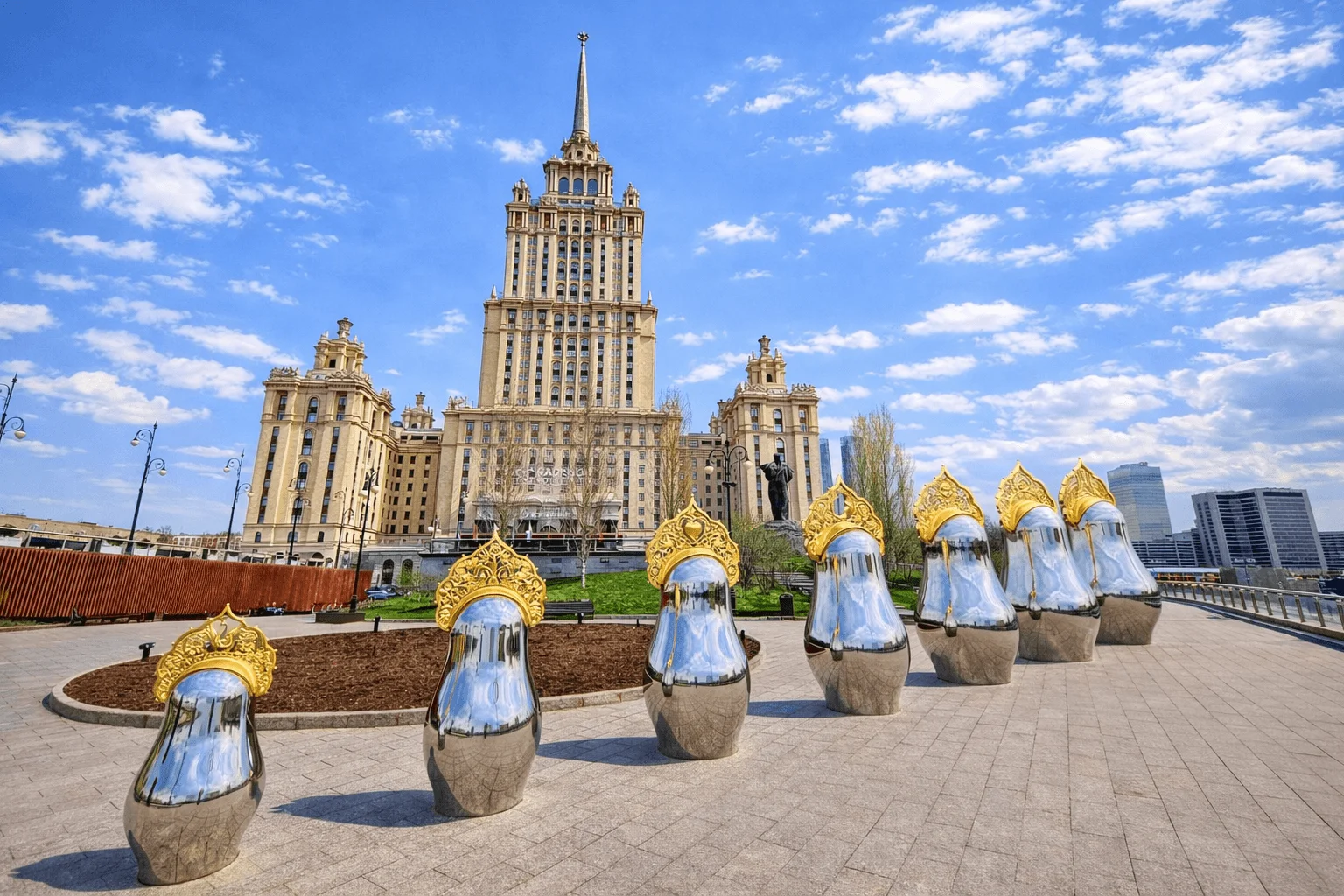
ENTORA took part in the concept, fabricated and installed a mirror-finish steel sculptural composition of seven figures on the square by the Radisson Collection. The composition has stood there since 2021, sustains a stream of photographs with no promotion, and withstands winters and rain with no maintenance beyond the usual cleaning. The sentence 'the hotel with the mirror figures at the entrance' arose on its own and stayed with the place.

One team handles the whole path: the meaning, the design, the engineering, fabrication at European workshops and installation. One contract, one person responsible, the budget fixed before fabrication begins. What goes up in the lobby is exactly what was approved in the visualisation, with no budget surprises and no arguments with the interior contractor.
Where to Start
A hotel without a sentence of its own competes on price and breakfast. A hotel with a sentence of its own competes on character, and character is harder to copy than a discount.
The first step is short: a review of your hotel. It shows where the lobby and the entrance lose their character, what image they could hold and where to begin so that the guest carries away a sentence worth repeating. A detailed breakdown of how a single piece works can be found in the article on the piece that makes a hotel memorable, and how we work with hotels is set out on the sector page.
Get in touch through the site form or message us on WhatsApp - whichever suits.