The Seam Splits Where the Contract Ends
On the render the piece is seamless. In reality it is assembled through many hands, and the result is lost at the borders between them. What one signature changes across the whole route, from idea to installation.
- Author
- Konstantin Burtsev, ENTORA
- Date
- Reading
- 6 min
- Topics
- process · fabrication · installation · accountability · shopping centres
The Render Has No Seams
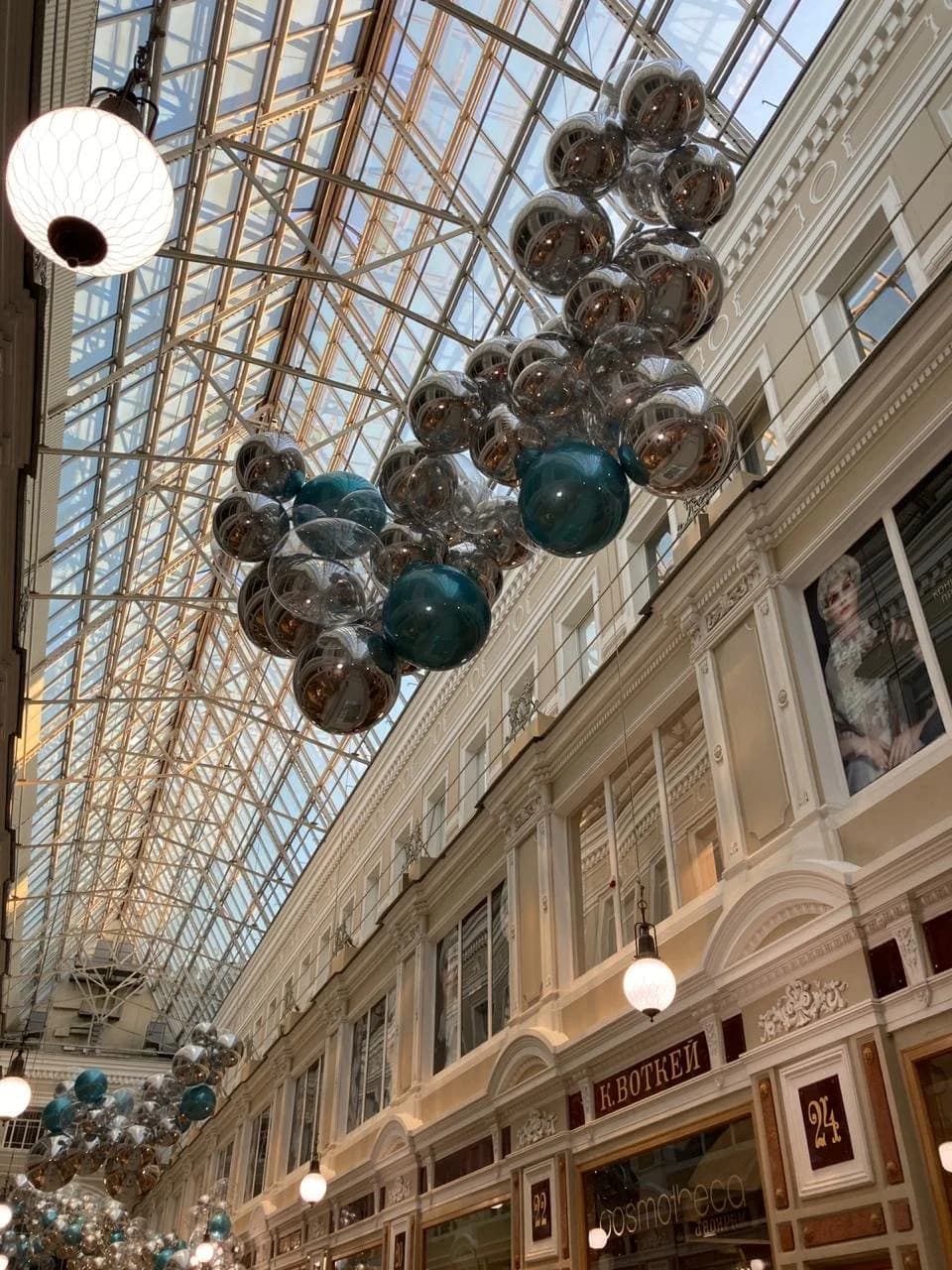
The render shows the piece complete. It hangs in the atrium, the light falls as it should, mirror-polished steel picks up the shopfronts, and not a single joint appears in the frame. That image is what the shopping centre says yes to.
Then the piece has to be assembled, and it turns out the whole piece does not exist. What exists is a structure somebody welds, a coat of paint applied in another workshop, packing, transport, an access platform and a night shift under the roof. Every handover between teams is a seam. Welds are visible in the metal; the rest run along the borders of contracts, and nobody notices them until the piece hangs out of true.
Five Honest Contractors and a Mediocre Result
A large piece is usually assembled like this. A practice draws the concept, a design consultant prepares the documentation, a structural engineer sizes the frame, a workshop fabricates it and an installation team puts it up. Five contracts, five zones of accountability, and each one closes on its own.
Everyone acts in good faith. The practice draws a mirror surface because the idea rests on it. The design consultant swaps mirror for painted metal because the budget handed to them does not stretch that far. The workshop fabricates exactly what arrives on the drawing, and the installation team hangs the assembly wherever the platform reaches. Nobody has lied, and at the same time nobody was accountable for the result matching the image the client paid for.
That is how the idea gets lost in the gaps between jobs. Where one contract ends and the next begins, it has nobody to defend it, no budget and no authority to decide.
The Conversation That Repeats on Every Site
The piece arrives on site and will not fit. The fixing runs into a beam that was missing from the drawing. Five people gather. The design consultant explains that the beam was not in the brief, the workshop shows a drawing signed off by the client, and the installation team points out that welding in place is ruled out here by fire regulations. The practice is no longer in the room, since its work finished six months ago.
The decision ends up with the client. They come to open the scheme and suddenly find themselves standing in as technical lead, choosing what to sacrifice, who covers the extra cost and how many days the opening slips. That role was not sold to them in any of the five contracts.
What One Signature Changes
When a single party is accountable for the whole route, decisions move earlier in time. The method of assembly is known at sketch stage, transport dimensions are fixed before the form is approved, and the fixing appears on the same day as the silhouette. The budget is built on a technology the workshop has already confirmed.
It is the dull part of the craft, and it decides whether the idea reaches the site intact. A sketch drawn without an understanding of welding reaches the opening at roughly half of what it promised.
The Table Where the Sketch Meets the Metal Samples
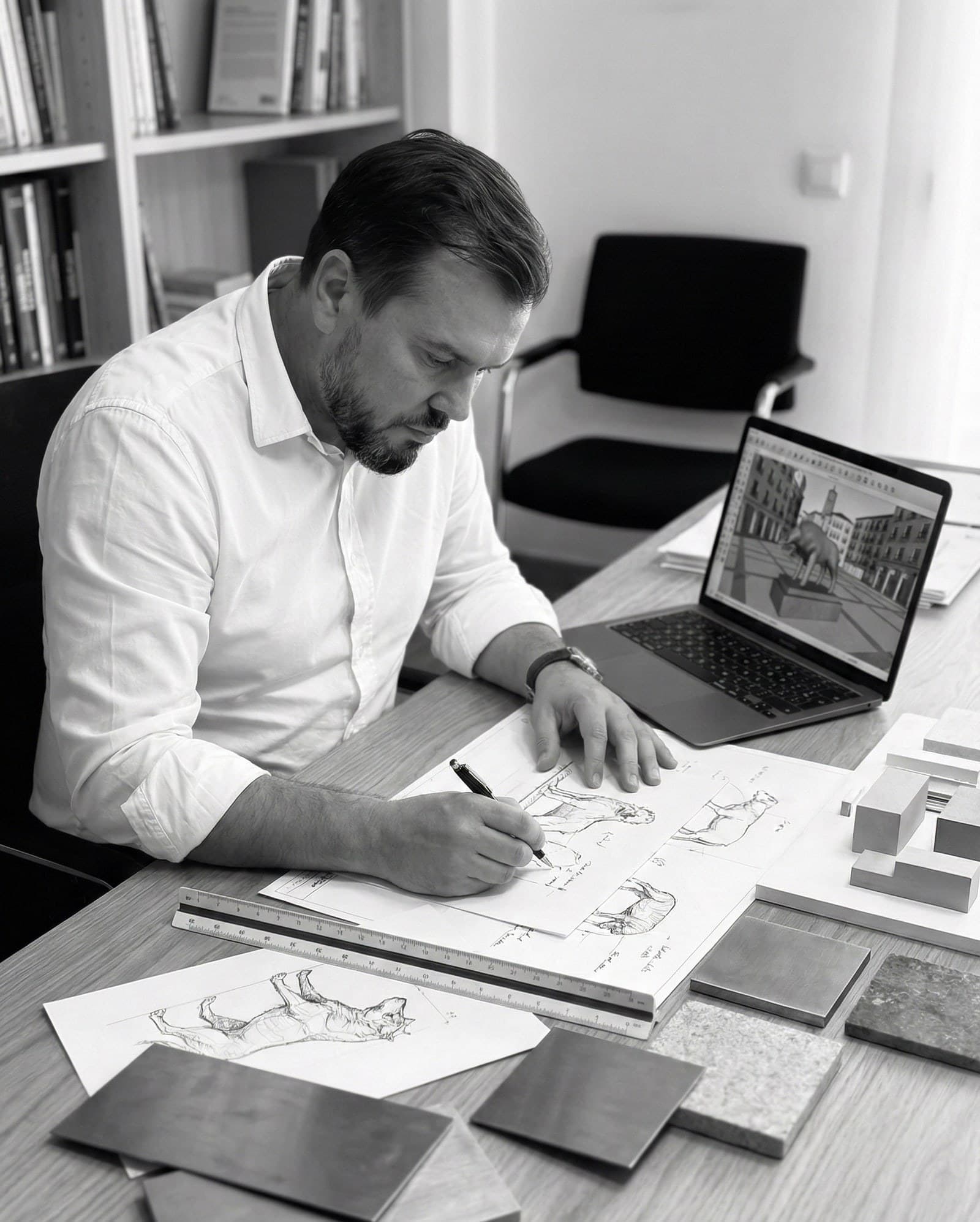
The first stage looks unremarkable. A sheet of sketches, a model on the screen and, beside them, material samples. The metal is chosen at the same moment the silhouette is drawn, because sheet thickness, bend radius, the weight of the assembly and the way it holds on to the floor or the roof all follow from it.
The form is then tested against reality. We work out how it breaks down into transportable elements and where the joints will run. A joint thought through at this stage becomes part of the drawing; the same joint improvised on site stays as a scar.
The Workshop, Where the Piece First Becomes Real
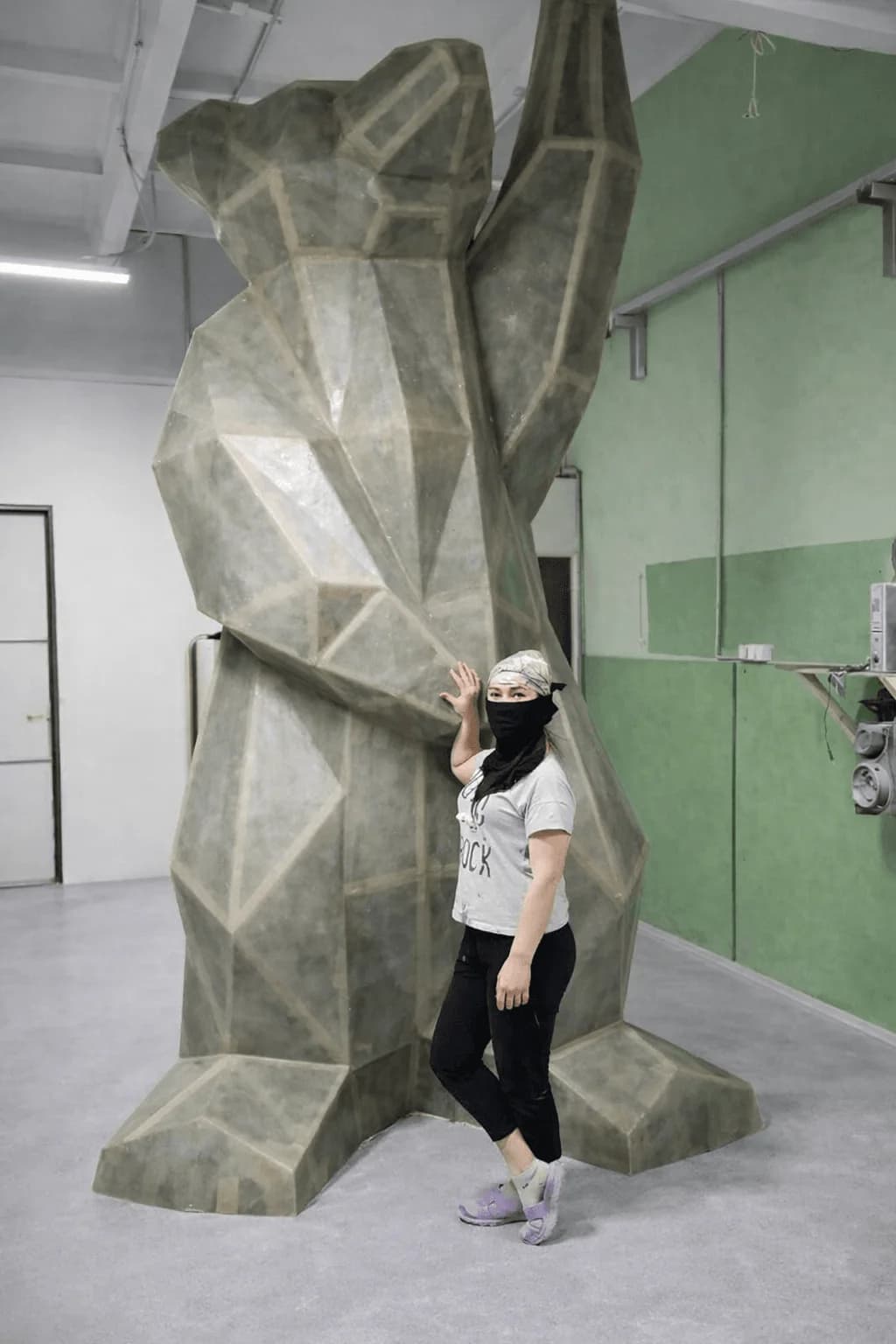
The piece becomes real long before it reaches the site. The structure is assembled whole on the workshop floor so the geometry can be read before the client sees it, and the lit elements are switched on there as well. Light on paper and light in metal behave differently, and that difference is cheaper to catch in the workshop.
The assembly is then taken apart, every element is labelled, and the packing follows the order in which it will come out on site at night. That small thing saves hours on site, sometimes a full shift.
Fabrication runs at trusted European workshops under our direction, without handing the piece to an outside manager. The workshop is accountable for the final look alongside the people who conceived it.
Installation Night
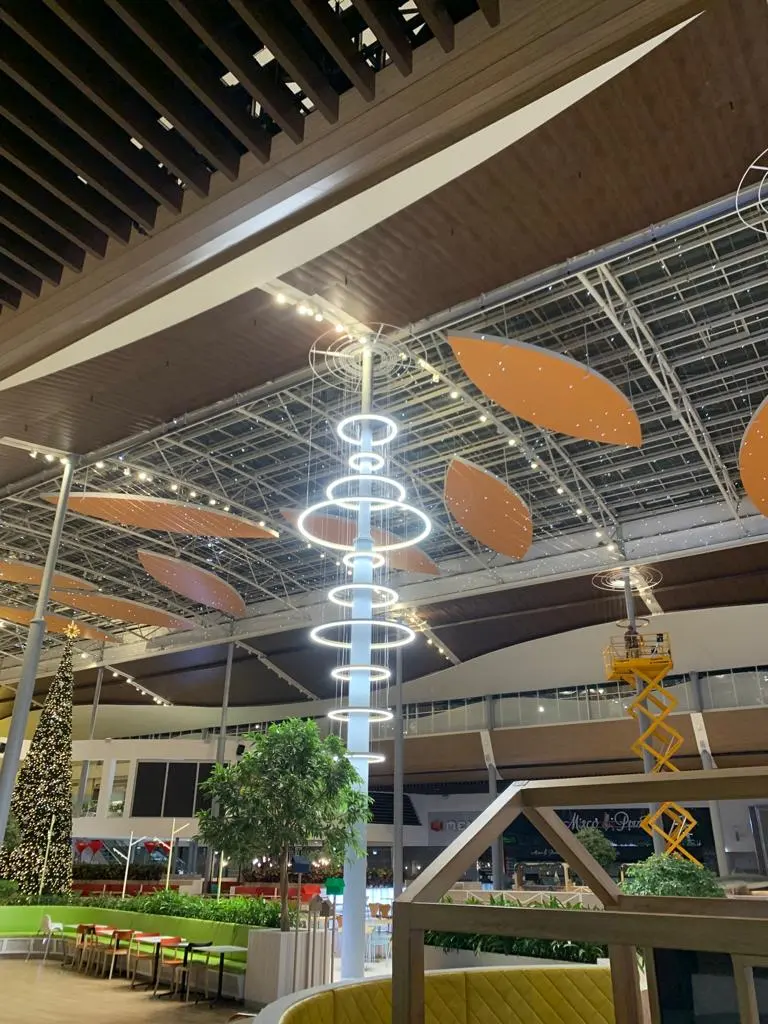
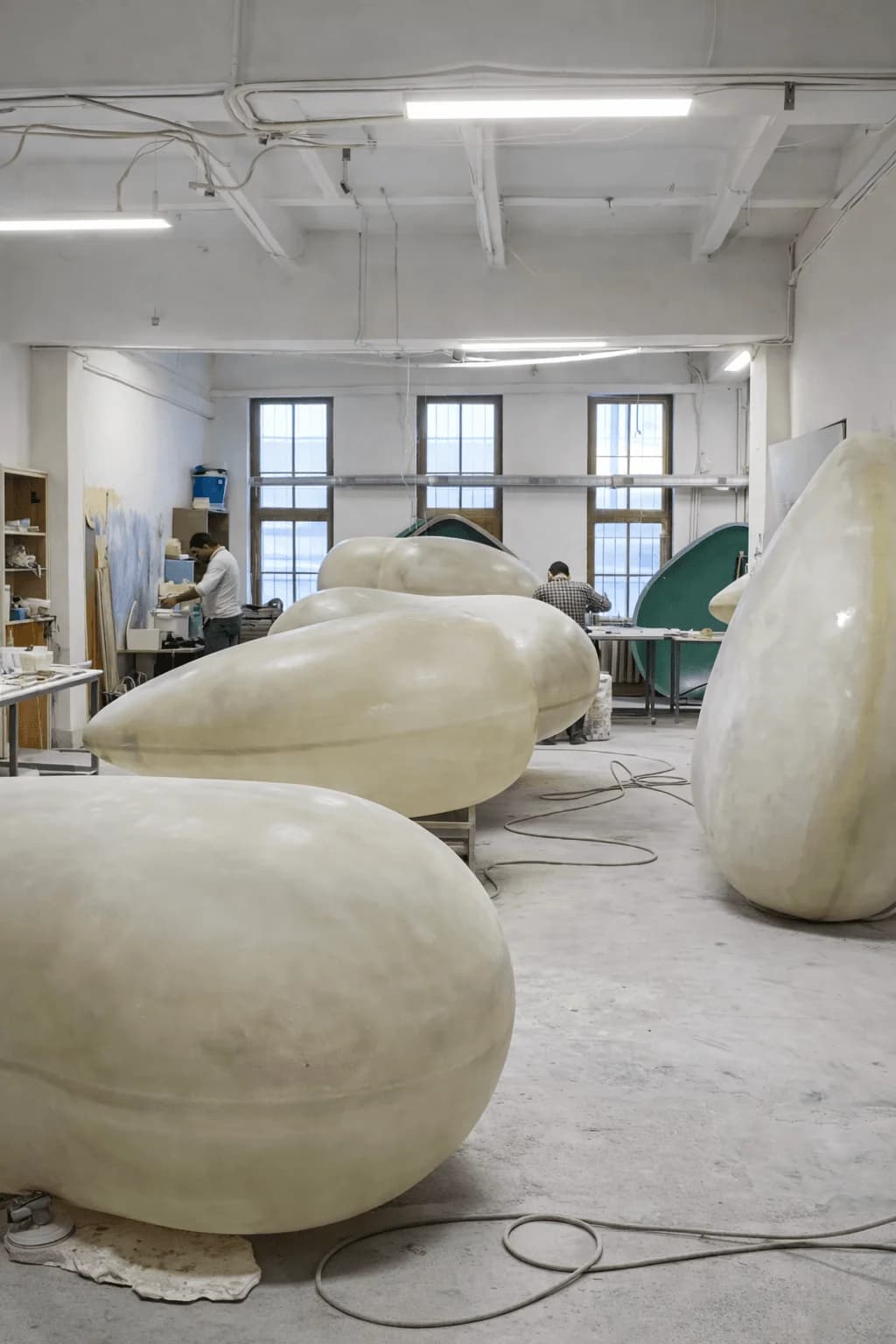
Installation is the test of every decision made earlier. The centre closes in the evening, the platform comes in at night and, by opening time, the floor has to be clean and the piece hanging in place. There is no time in that window to look for someone to blame.
This is how the lighting system of a shopping centre with a 207,200 sq m catchment went up. More than 500 light pieces, three weeks of installation on night shifts, and a centre trading as normal throughout. A programme like that rests on one condition. Whoever hangs the piece at night has taken part in the decisions from day one.
Once the season ended, part of the system stayed on as the gallery's everyday lighting, and footfall at the scheme rose by 35% against comparable centres in the catchment.
What the Client Gets Instead of Seams
- One contract and one budget for the whole route: concept, design, engineering, fabrication, installation and handover.
- A date one named person is accountable for. The move from workshop to site happens inside the same team and does not shift the opening.
- A phone number somebody answers at the moment something goes wrong.
- A warranty on the whole assembly, including the fixings and how the material behaves five years on.
Changes still happen under this arrangement. Budgets get cut, a different tenant arrives, the opening date moves. The difference is that the rework happens inside one team and never turns into a negotiation between five legal entities with the client as referee.
Where to Start
A piece that has come out weaker than its render has almost always been assembled through many hands, and every pair of hands did its own part honestly. The one that matches the promise is the one whose whole route, from idea to installation, is closed under a single signature.
At ENTORA that signature covers the full chain, night shift on site included. How it breaks down into stages is set out on the process page. What the pieces themselves are made of is covered in the piece that needs no upkeep. Seasonal and permanent programmes for shopping centres are described on the sector page.
It all starts with a reading of the space. We look at what piece it can carry and where the current arrangement is losing the result at the seams. Write to us through the form or message us on WhatsApp, whichever suits you.