New Marble Never Reaches the Review
Three out of four hotel works in Spain in the first half of 2026 are refurbishments of what is already built, and the works as a whole move more than €1,077 million. The money changes the condition of the building. The conversation about the hotel stays the same, because the description of a place lives in other people's words, and new finishes never get that far.
- Author
- Konstantin Burtsev, ENTORA
- Date
- Reading
- 8 min
- Topics
- hotels · refurbishment · positioning · communal areas · reviews
A Hotel Completes Its Refurbishment and the Reviews Stay the Same
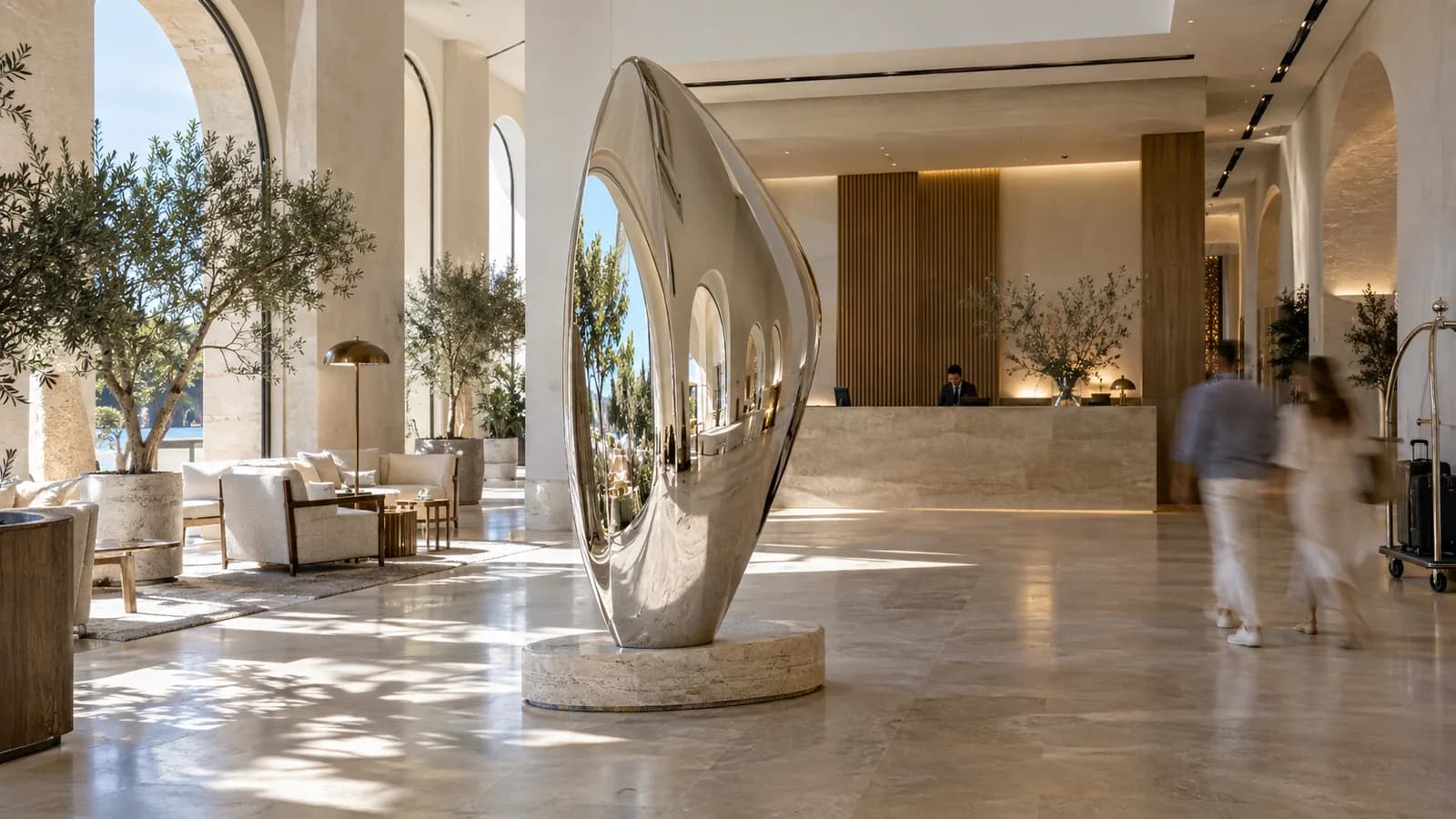
A coastal hotel has finished its refurbishment. New rooms, the air conditioning stripped and rebuilt, different light in the communal areas, stone on the lobby floor, furniture that took six months to choose. The site is handed over, the season is open, the money is spent.
Three months on, the general manager opens the reviews and reads much the same as before the works. Clean. Attentive staff. Good breakfast. Fine view. The same words were there three years ago, except that now they sit on top of finishes nobody has named.
That is the most expensive silence in the hotel business.
Spain Is Putting Money Into What Is Already Built
That is exactly what the market is doing. Intescia-DoubleTrade counts 556 hotel works in Spain in the first half of 2026 - figures Hosteltur published on 9 August 2026 - and 428 of them, almost 77%, are refurbishments of existing buildings. That is how many reached the tender and project databases; the whole market is larger.
New build takes 19.7%, extensions 3.4%. All 556 works together move more than €1,077 million, 12% up on the same period last year, at an average investment of €1.94 million per project.
Investment in the hotels themselves is a separate flow of money from refurbishment. Colliers, in figures dated 1 July 2026, puts investment in Spanish hotel property at €2,460 million over the half-year, 26.5% more than a year earlier, with 60% of it going to the resort segment: the Balearics €577 million, the Costa del Sol €435 million, the Canaries €363 million.
The average price per room in those deals has passed €213,000, more than double the level of a decade ago. For an investor that is the price of an asset, and it has nothing to do with the rate a guest pays.
The works run thickest where the resort hotels stand: Andalusia 97 works, the Valencian Community 66, Catalonia 57, the Balearics 53 works worth €61.2 million, and Málaga province leads on spend, with 37 works worth €290 million. What follows is our own assumption: one season on, fresh finishes will stop setting you apart from the hotels next door, because everyone will have them.
A Refurbishment Changes the Condition. The Description Lives in Other People's Words
A hotel's positioning forms outside the building: in the reviews, in the guests' photographs, in the way a person answers the question 'where did you stay'. Those are other people's words, and only what can be retold gets into them.
A guest retells what happened to them. The condition of the building is not part of that. New marble never reaches the review, because there is nothing to say about marble out loud: it reads as the standard for the class and gets noticed only when it is missing.
The same fate awaits rewired circuits, new double glazing and rebuilt ventilation. All of it is obligatory, all of it costs money, and all of it works so that the guest notices nothing.
Hence a gap you can see in your own reviews across two seasons: the scores for condition after the refurbishment and the sentence people use to describe the hotel. Our reading is that the two move at different speeds and the second one lags.
When a Refurbishment Really Does Move the Price
A refurbishment moves the rate when it changes the whole product, including what people call the hotel. In May 2024 Meliá set out to Hosteltur the results of its repositioning programme: the average rate in the Canaries rose 57% against 2019, in the Balearics and on the coast 59%, and for its city hotels in Spain the group expected a further 38% once the works were finished.
In its Spanish portfolio the group planned to lift the Luxury and Premium share from 45% in 2019 to 68% by 2026.
Two caveats are obligatory here. First: these are the company's own figures about itself, and there is no independent measurement. Second: the comparison runs against 2019, and folded into that year is the general rise in Spanish hotel prices that would have happened without any refurbishment at all.
No verifiable primary source exists for the link 'an artwork in a communal area lifted the average rate by X%'. We looked for one separately and found none. Anyone who quotes you such a figure is quoting it off the top of their head. You will have to measure the effect in your own numbers, zone by zone.
The Point After Which It Stops Being Cheap
A refurbishment has a calendar, and in that calendar there is a point after which the same job is done another way and for different money.
While the finishes, the ceilings and the lighting scheme are still unapproved, preparation for the artistic element falls into lines the cost plan already has: the fixing is cast into the slab with the other loads, power arrives at the right point with the rest of the first fix, and the lighting is calculated for the future piece from the start.
Once the finishes are signed off, the same job becomes a separate operation. The finished ceiling has to be opened up, or the piece has to stand on the floor, power has to be run across completed surfaces, and the lighting has to be chosen from whatever already hangs there. The piece itself costs the same. What gets more expensive is access to it.
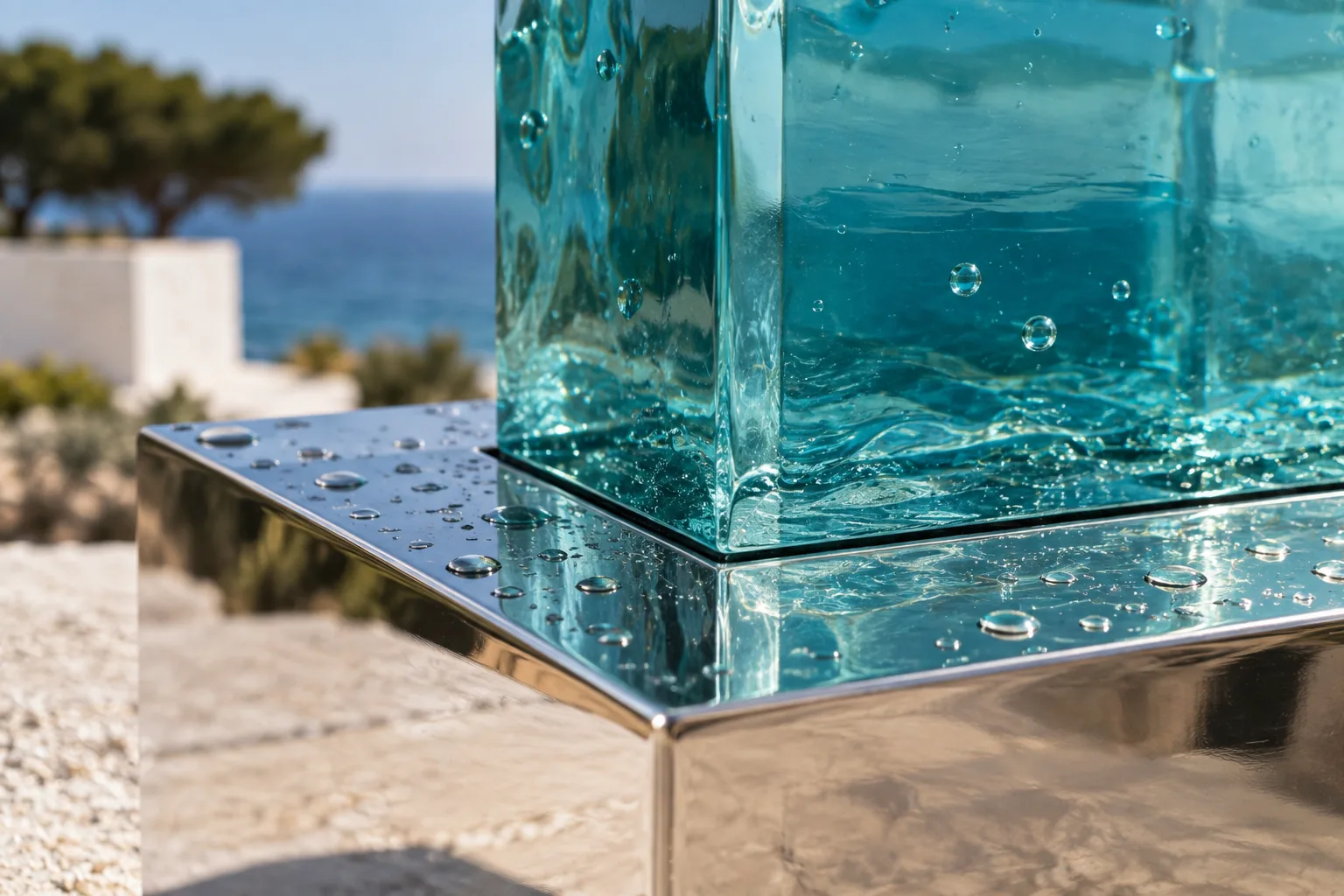
There is a second cost of arriving late, and the cost plan does not show it. A piece chosen for a finished interior reads as something brought in from outside. We call this 'expensive and out of place': the piece can be excellent in itself and still have no relation to the place it stands in. That impression costs exactly the same money as the right one.
So the question 'what goes in the lobby' is worth asking in the same month the lobby finishes are discussed. After handover the price is no longer the same.
Three Places Where This Shows First
The lobby. A separate piece sets out how the sentence a guest later uses to describe the hotel takes shape here - the first sentence of a hotel. For a refurbishment one thing follows from it: while the communal area holds no form of its own, it gives the guest nothing to retell, and the hotel is left with a description about cleanliness and breakfast.
The evening. Dinner on the coast starts late, and for much of the year it is dark by then. A terrace that has worked all day on its view switches off with the sunset. Your own restaurant takings for the evening hours show how many guests eat with you after that and how many go into town. Warm directed light and a piece that holds it give the evening a reason to stay inside the hotel.
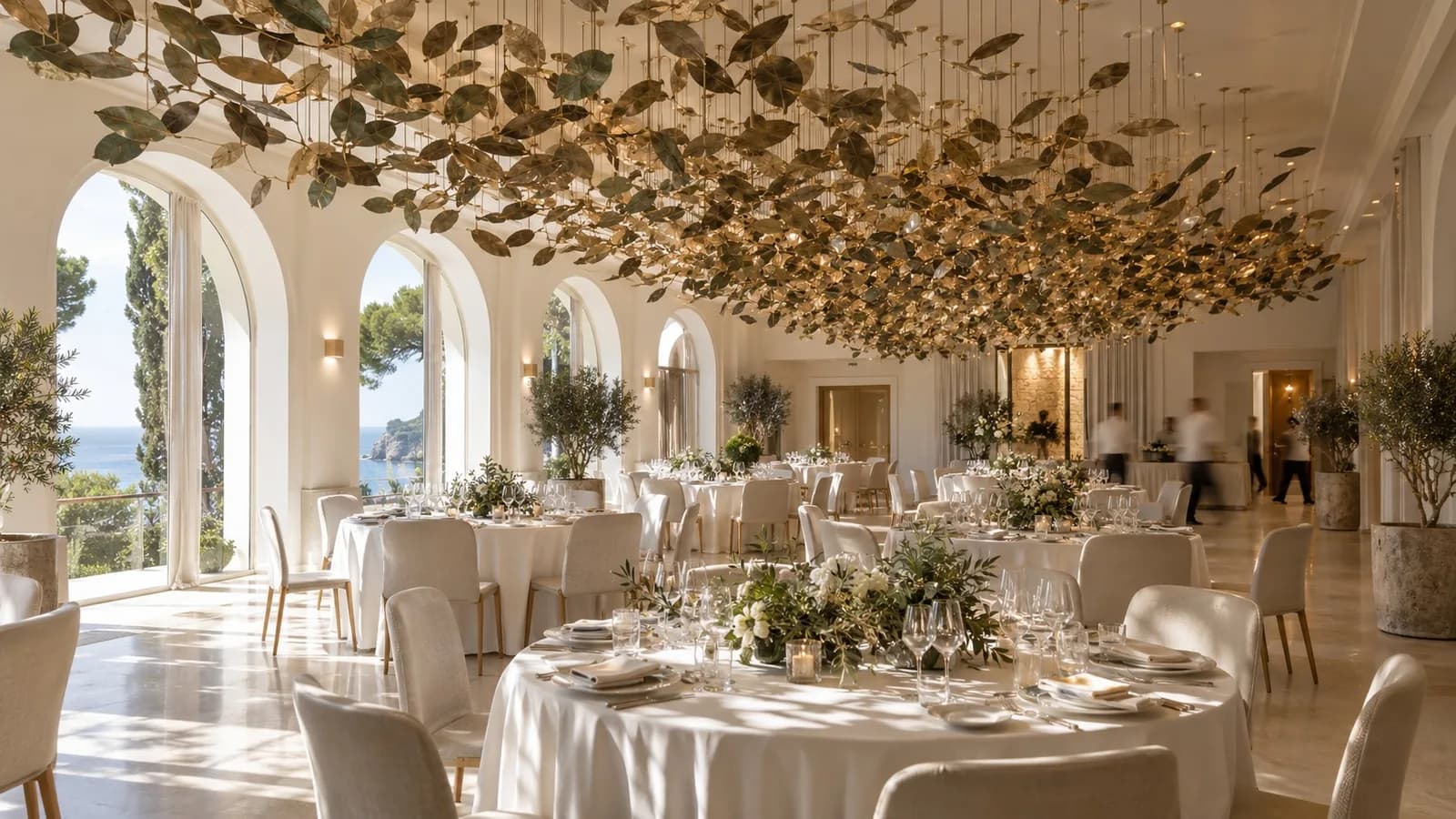
The banqueting and wedding room. It is sold on floor area and capacity, and chosen on photographs. With no distinctive backdrop in the room, a bride has nothing to compare it with but other people's pictures. One question to the sales team tests it: whose photographs do people most often show you when they ask for a room like that.
What to Ask Before the Cost Plan Is Signed Off
An honest boundary first. If a hotel's occupancy is low because of price, location or service, an artistic layer will not cure it, and those are where to start. This conversation makes sense where a hotel already holds its condition and its standard, and there is nothing to set it apart from the hotels next door.
Four questions that cost less at the start of the works than after them.
- Which photographs are we most often recognised by, and do they show the hotel itself or only a shoreline that belongs to every neighbour at once.
- What changed in the reviews after the last upgrade. If nothing did, the money covered the condition and left the description untouched.
- Which area is under-earning: the evening on the terrace, banqueting, repeat visits.
- Who on the project owns the step from sketch to installed piece. The interior practice covers the finishes, the main contractor covers the works, and that responsibility is often nobody's.
The artistic element usually dissolves into the main works package: nobody leads it from idea to handover, and the result depends on whoever has the attention to spare.
Work That Fits Inside a Refit
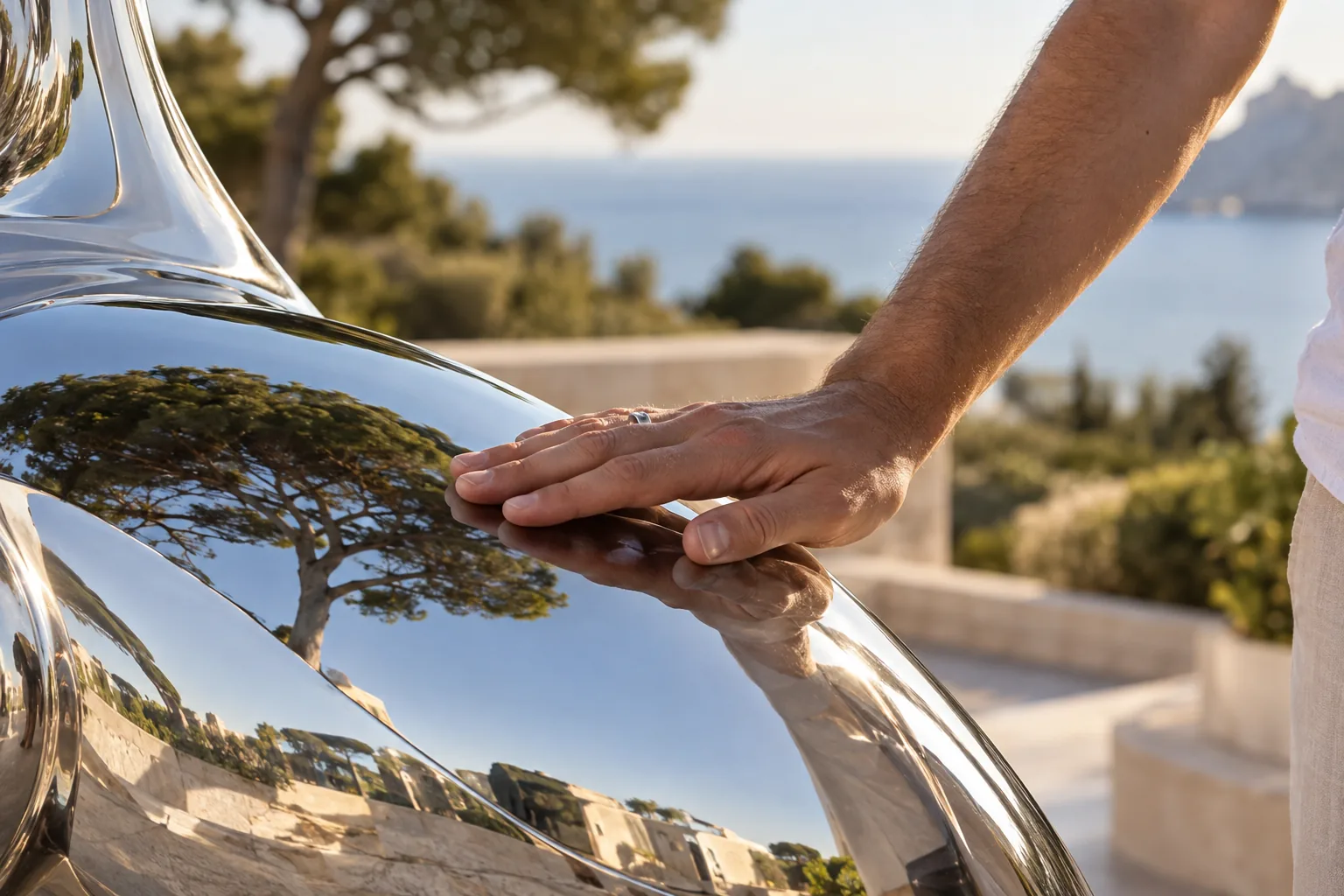
ENTORA handles that layer end-to-end: intent, engineering, fabrication, installation and aftercare in use. We work inside someone else's calendar, so the installation programme is built around the working hotel: night shifts, windows between arrivals, sign-off before breakfast. Upkeep is costed at the engineering stage: seven mirror-polished sculptures that have stood at a hotel since 2021 have needed nothing but washing in all that time.
If an upgrade is under way, or still only at cost-plan stage, the first sensible step is a review of your hotel: where the communal areas give a guest nothing to describe, and at which point in the calendar that is cheapest to put right. What a single signature piece gives a communal area is covered in the piece that makes a hotel memorable, and how we work with hotels is set out on the sector page.
A refurbishment gives the building its condition back. What reaches the review is only what there is something to say about.