The Square Metres Everyone Walks On and One Owner Pays For
In Spain, 30 shopping centres are going through refurbishment - more than 1,380,000 m², or 8.2% of the country's entire stock. The main question in a refurbishment like that is what to put in the communal area, the part that is not let and earns no rent. Three contenders compete for its budget, and what separates them is the line for running costs.
- Author
- Konstantin Burtsev, ENTORA
- Date
- Reading
- 10 min
- Topics
- shopping centres · communal areas · refurbishment · running costs
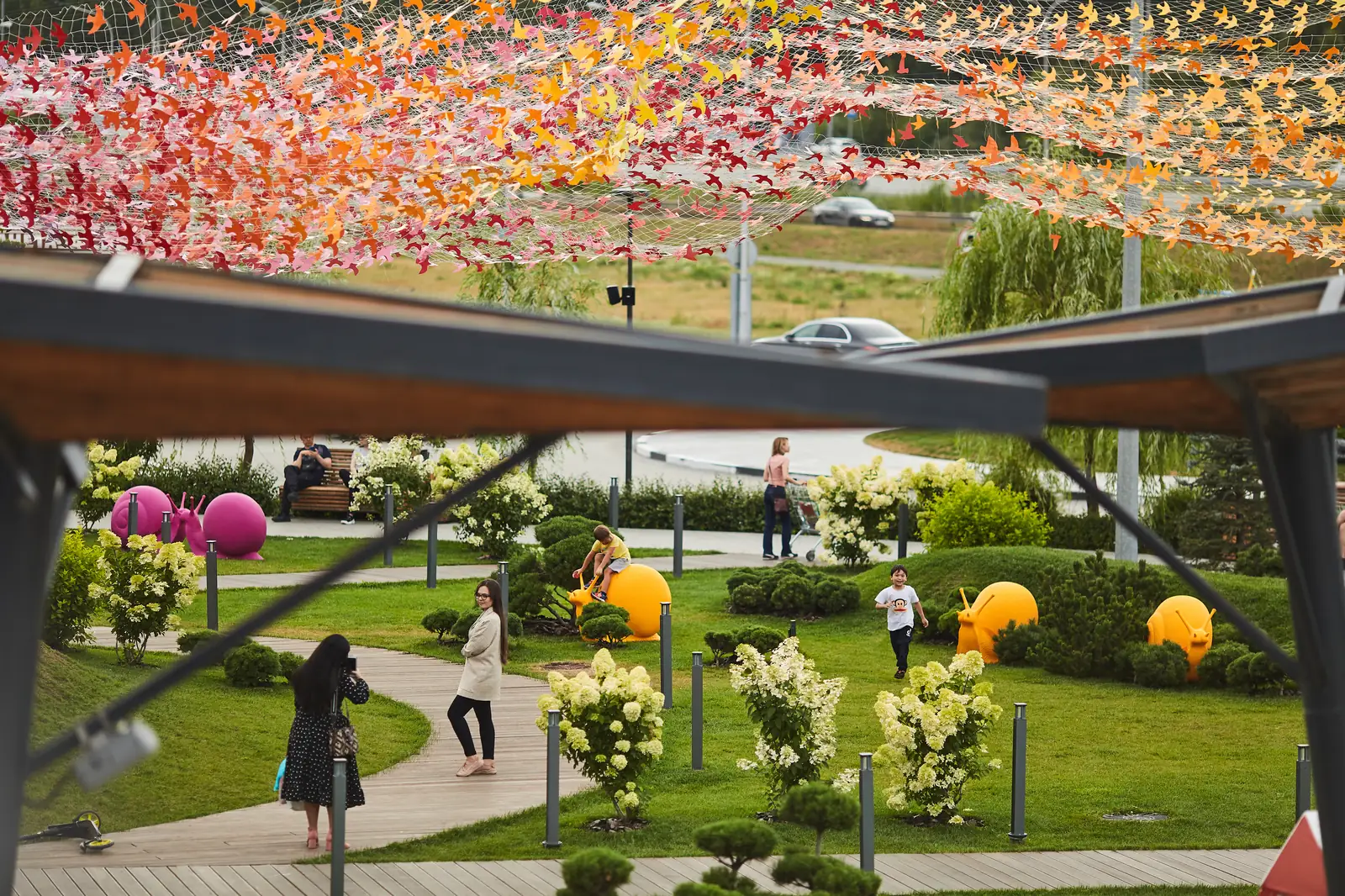
The Square Metres That Never Reach the Rent Roll
A shopping centre has two kinds of floor area. The first is let and earns rent. The second connects the first: the atrium, the gallery, the forecourt, the courtyard, the roof. Those square metres sell nothing and appear in no line of income.
Every visitor passes through them. The walk from the entrance to a shop, and from one shop to the next, runs across them. The owner pays for them.
What follows concerns only that second kind of area. The lettable shop floors live by their own rules, and this discussion does not touch them.
While the centre was being built the question did not arise: the communal area was whatever was left between the tenants. Now the question does arise, and it is an expensive one.
Spain Has Stopped Building Centres and Started Rebuilding Them
Little new was built in 2025: five schemes added a little over 132,000 m². A great deal was rebuilt. Around 400,000 m² were modernised, more than €120 million went into the work, and a further 30 centres and retail parks are under refurbishment now - more than 1,380,000 m², or 8.2% of all floor area in Spanish centres and retail parks. The figures come from the Spanish Association of Shopping Centres and Retail Parks (AECC), of which we are a member.
One square metre in every 12 across Spain's shopping centres is being worked on right now.
The market itself is healthy, and the rebuilding is paid for out of its own money. Sales at centres and retail parks came to €58,524 million in 2025, 6% up on the previous year; footfall reached 1,955 million visits, up 2.4%; average spend per visit rose by 3.5%. The association published those results in February 2026. The first half of 2026 added more: sales up 7% and visits up 4% against the same period a year earlier. The country has 595 centres and retail parks, 16,954,523 m² of gross leasable area and 32,877 shops. The half-year figures were published on 30 September 2026, in time for the association's congress in Palma.
The sector has money and little new is being built. So an owner puts it into the asset already standing. And in a centre already built there is essentially nothing to change except the communal area: the shops are in place and trading.
What a Centre Shows When It Shows a Refurbishment
The clearest example this month is Madrid Sur in Puente de Vallecas. The centre finishes work in October 2026 and triples its retail space, taking it to 23,675 m². 85% of that space was let before the works even ended, leaving 3,604 m² free. Letting is not this project's problem.
The page for the refurbished centre lists three new areas. Plaza Unión on the ground floor is an open space with sculptures of divers by the artist Hernán Marina; in the visualisation they hang above the square, with shops and restaurants with terraces around them. The main entrance, on the same floor, gets a façade carrying a mural by the artist Siquier. The third area is an open terrace on the first floor with dining and leisure. Coverage of the project describes the model as a move from an enclosed retail space towards a meeting place open to the district.
One caveat matters here, and the centre makes it itself. All of this is still a design: a line under the visualisations on their site states that the render is illustrative, is not contractual and that details may change in the final design. There are no photographs of the finished areas, because the areas do not exist yet.
A centre that has tripled its retail space tells its own story through the spaces it cannot let, and in two cases out of three it names the artist.
All of that describes the project. It is not our assessment of someone else's work. But the answer to why anyone spends on a communal area at all is visible in it: the area is what sets the scheme apart. A tenant list does that job poorly, since the strong chains sit in several schemes in the same city.
Three Contenders for One Budget
Then comes the choice, and the choice is usually made on the render. All three render well. The difference shows a year after opening, in the line for running costs.
The Attraction With a Ticket
The easiest of the three to understand. It has revenue, and that is a strong argument: the area starts to earn on its own.
El Cañaveral in Vicálvaro shows what this looks like in new schemes. From the description of the project in the Madrid press in May 2026: more than 77,000 m², more than 50 shops, up to 13 padel courts, investment of more than €100 million, opening in late 2027. The leisure element holds Planet Fitness, Urban Planet, Ilusiona and a double-height dining area.
There is evidence of demand. A survey of 2,386 people in the United States, Canada, Australia, France and Spain, published in August 2026, found that 93% put virtual reality first among the attractions they wanted. Of the 4,746 entertainment venues surveyed, only 83 had a VR room. Two caveats go with those figures. The venue survey covered the United States and Canada and says nothing about the Spanish market. The research was commissioned by a VR-room operator itself, so there is no independent measurement here.
What this means for a communal area. The attraction runs as a separate business inside the centre: staff on shift, a till point, opening hours, a queue, age limits, safety procedures, depreciation on the equipment. An operator usually runs it, which means the square metres pass to a tenant and the communal area becomes let space. That is a sound decision, but it can no longer be called a decision about the communal area, because no communal area is left after it.
Content on Rotation
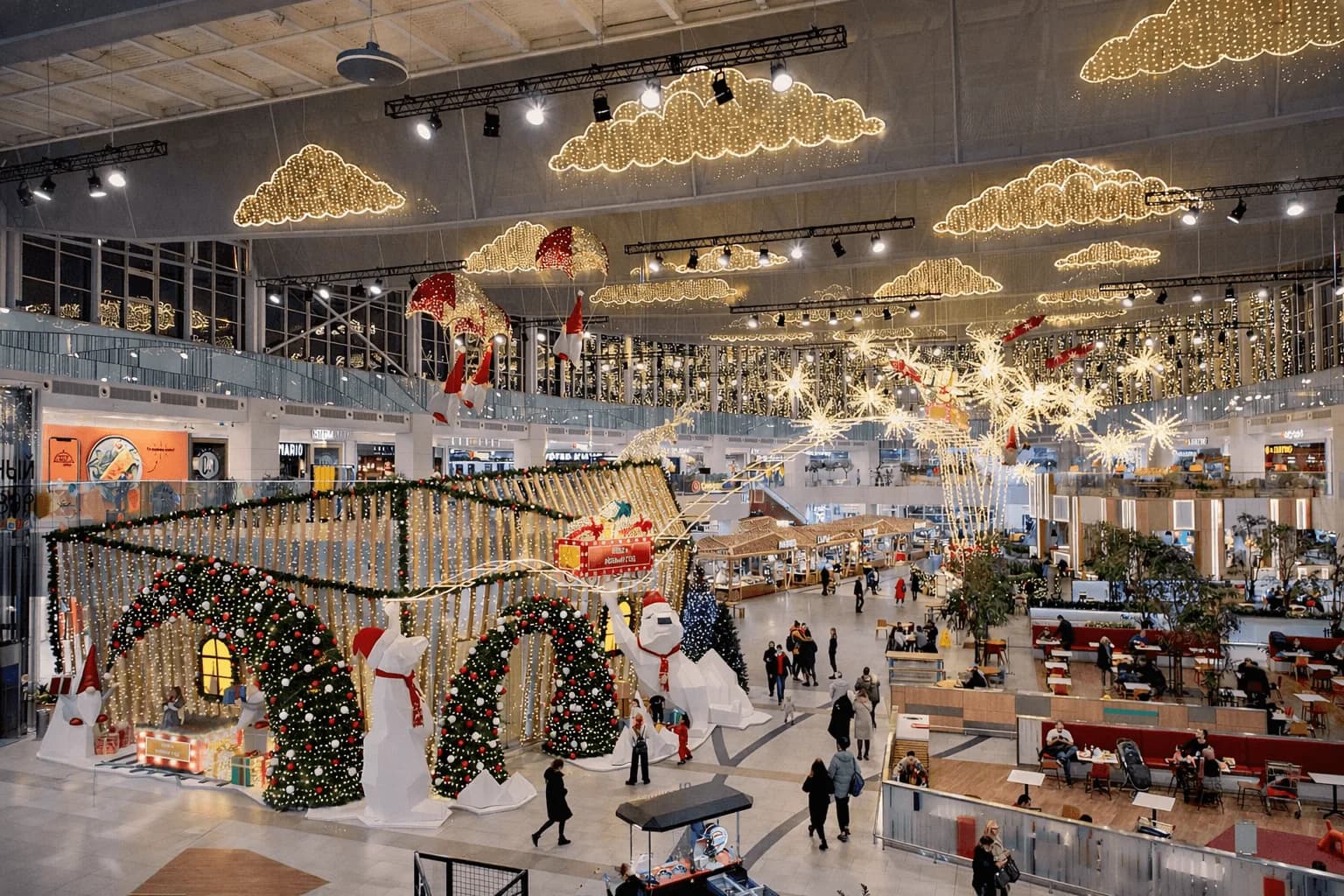
The second contender is an experience assembled from content: projections, screens, a themed installation, a seasonal story.
The economics rest on one property: the experience lasts until the second visit and no longer. Someone who saw it last month walks past it this month. So the budget covers the changeover as well as the fabrication: a new theme, a new install, a new strip-out, storage between seasons.
We work this way too, and we have the numbers for it. The Christmas programme across 210,600 m² that we ran for Ingka Centres lifted footfall by 14% on the previous season and took first place for best shopping centre environment 2022-2023. A seasonal piece does exactly what it is put there to do, but it does it within its window and then asks for the next one.
The Piece That Simply Stands
The third contender is the dullest in a presentation and the cheapest to run. It has no ticket, no till, no staff, no timetable and no updates. It stands, and it works for as long as it stands.
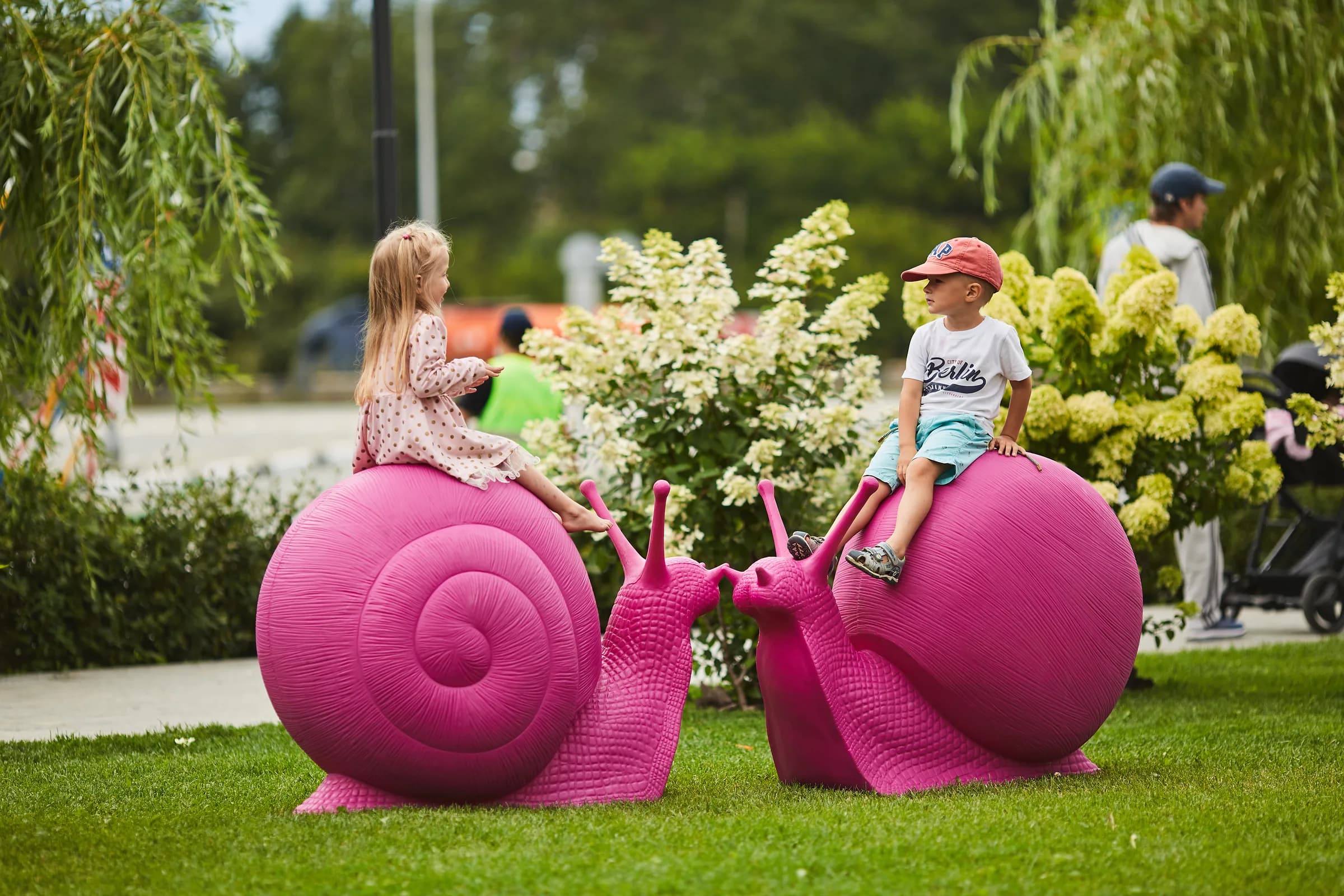
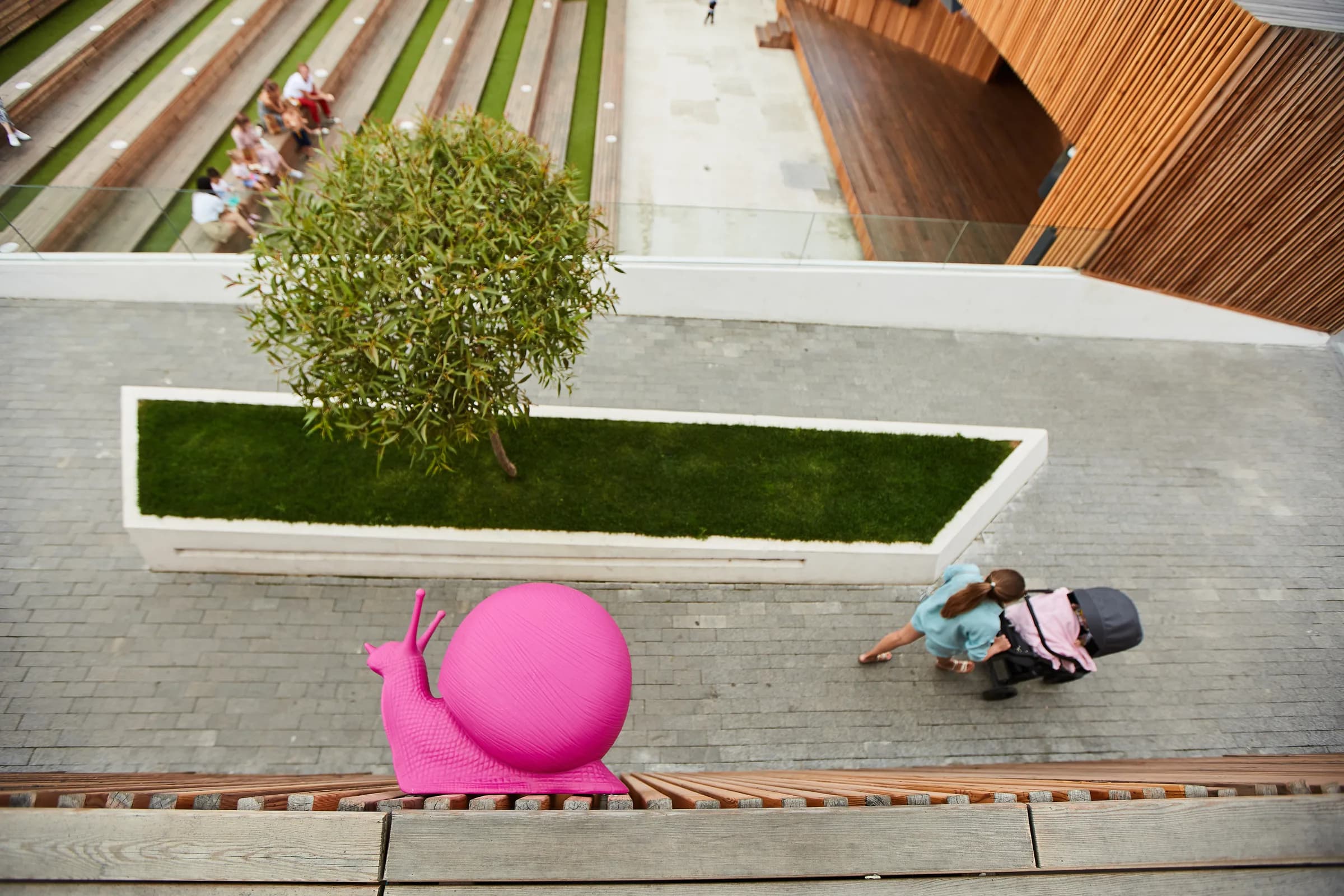
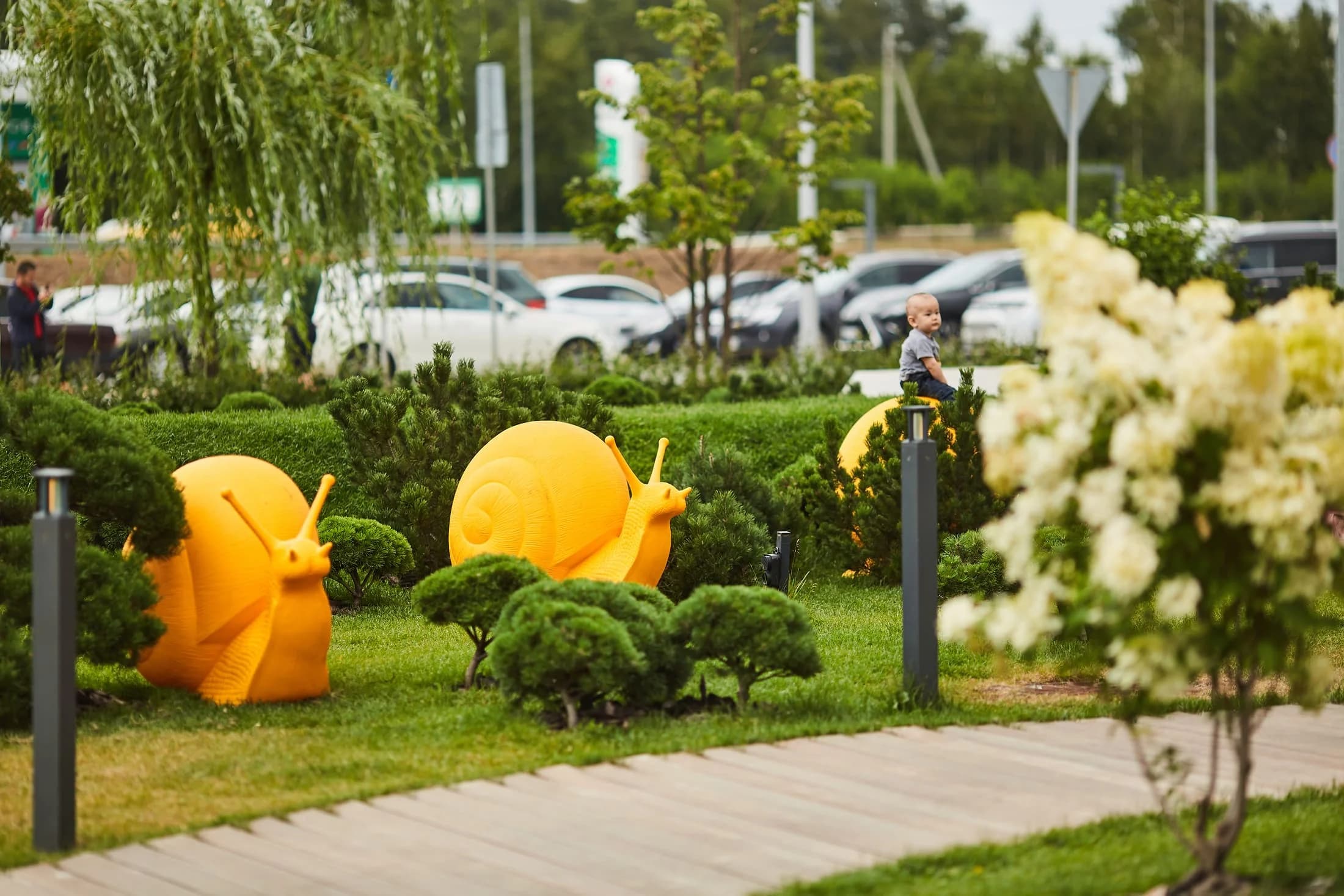
Our park across 13,500 m² holds 58 figures in recycled plastic. It has stood since 2021 and works 365 days a year. It needs no upkeep: in all those years it has only been washed, with no servicing, no staff and no replacement parts. Footfall at the entrance rose by 25%. The client is Ingka Centres, as in the previous case.
The weakness of this contender is better named straight away. It brings in no revenue of its own and gives the press nothing new every three months. Its effect gathers over years and does not show in a quarterly report.
The Questions That Separate the Three
All three contenders look identical in a board pack: an image, a floor area, an installation period, a cost. Two questions separate them, and the first is this.
What appears in the cost line a year after opening, if nothing changes?
For the attraction, if the centre runs it itself: payroll, equipment servicing, insurance, licences. If it has gone to an operator the owner has no cost, and no area either, because the area has become let space. For content on rotation: the next theme and two installations a year. For the piece: a wash.
The second question is of the same order. What happens to this area in three years with no further decisions? The attraction either works or it is closed, and what sits in its place then is a hole with services already run to it. Content dates and needs replacing. By then the piece has either become the marker people use when they explain where to meet, or it has stayed background that people walk past. The material does not decide which of the two. Whether it landed on the route decides that, and whether any air was left around it.
None of the three answers makes a contender a bad one. They simply cost different money, and a large part of that money is paid after opening.
What We Will Not Tell You
At this point it is customary to quote the percentage by which an artwork lifts a centre's turnover. We will not give you that figure.
There is no verifiable primary source behind the claim that 'a piece in the communal area added this many per cent to turnover'. Anyone who quotes you such a percentage is quoting it from thin air.
Our 25% at the entrance and 14% over a season are our projects, our client and our years. They say that we know how to produce that result. They say nothing about the result you will get on your own site. You have to count it on your own areas: footfall, dwell time and tenant turnover along the route, measured before the works and again a full season after them.
Three Questions Before the Area's Budget Is Signed Off
-
Who on the project is accountable for the communal area as a whole? Lighting, planting, wayfinding and furniture are run by different contractors, and each has its own brief. Whether the area reads as one place is usually nobody's responsibility, so it ends up assembled from four decisions, each of them right on its own.
-
Which of the planned items will need people and money after opening? The answer changes the comparison between the contenders more than any difference in the installation estimate.
-
Which single image is your centre known by today? If there is no such image, the place for it is free and can be taken deliberately. If there is one, it is worth strengthening. A new attraction next to an image like that usually blocks what already works.
We have looked at this separately: over a horizon of several years the cheapest option turns out to be the piece that only asks for a wash. How a seasonal programme works, and why the decision about December is taken in summer, is in the Christmas designed in July.
What We Do Here
ENTORA runs the artistic layer of an environment as a single chain: intent, engineering, fabrication, installation and support once it is in use. That is the answer to the first of the three questions. One party is accountable for the whole area, and the same party answers for what becomes of that area years after handover.
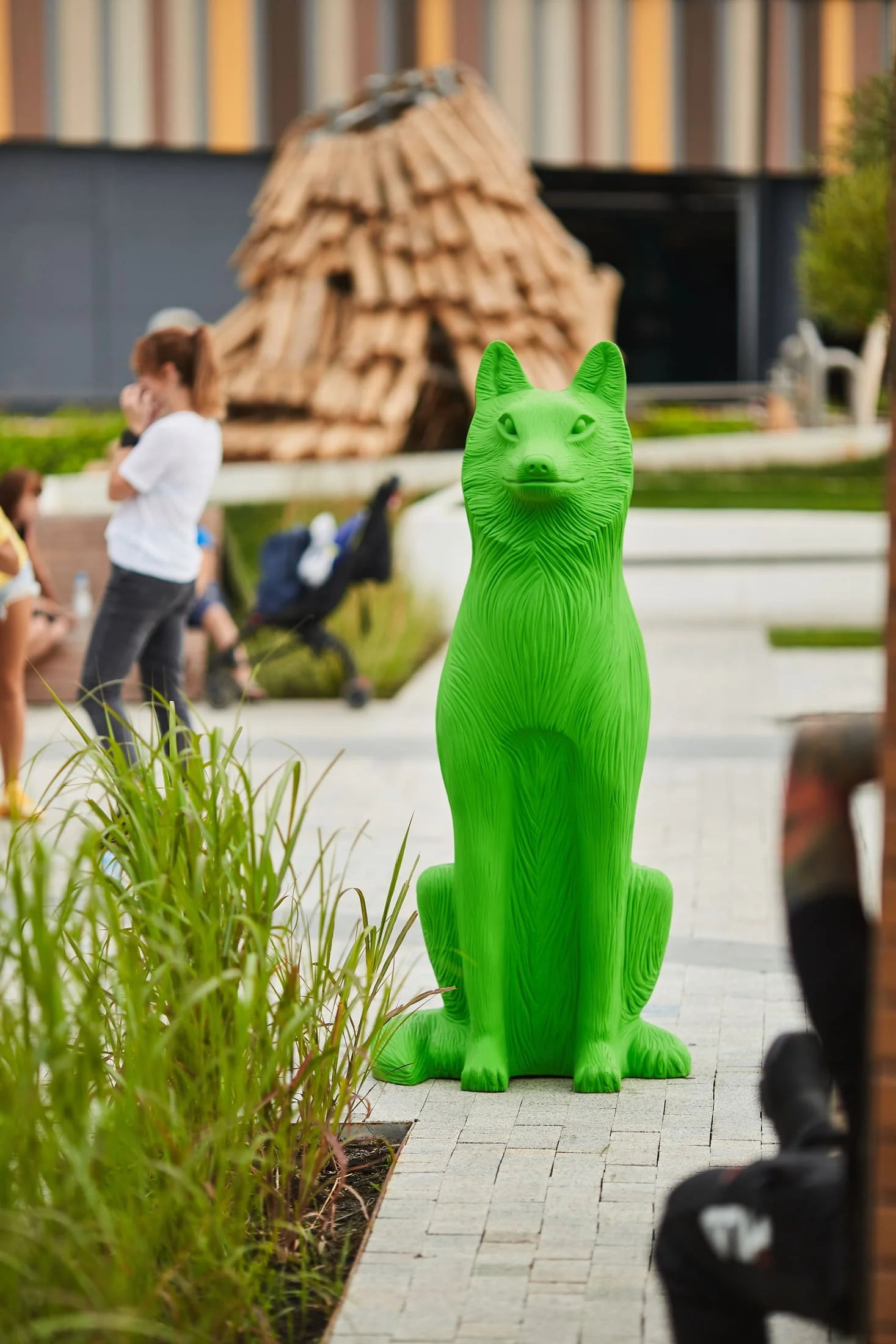
Two of our shopping centre projects sit on the site with their figures and photographs: a route of 58 figures across 13,500 m² and Christmas across 210,600 m². How we work with shopping centres is set out on the sector page.
A communal area sells nothing. It decides whether the person walking through it right now comes back.